
Dian Fossey Grave Site: A Journey into Rwanda’s Conservation Heart
The Dian Fossey Grave Site stands as one of Africa’s most powerful conservation landmarks, hidden high within the mist-covered slopes of Volcanoes National Park. Tucked away in a quiet forest clearing, this sacred place is far more than a memorial. It represents sacrifice, determination, and the relentless fight to protect the world’s remaining mountain gorillas. For travelers exploring Rwanda, visiting the grave site is not simply another stop on a safari itinerary, it is a journey into the heart of conservation history.
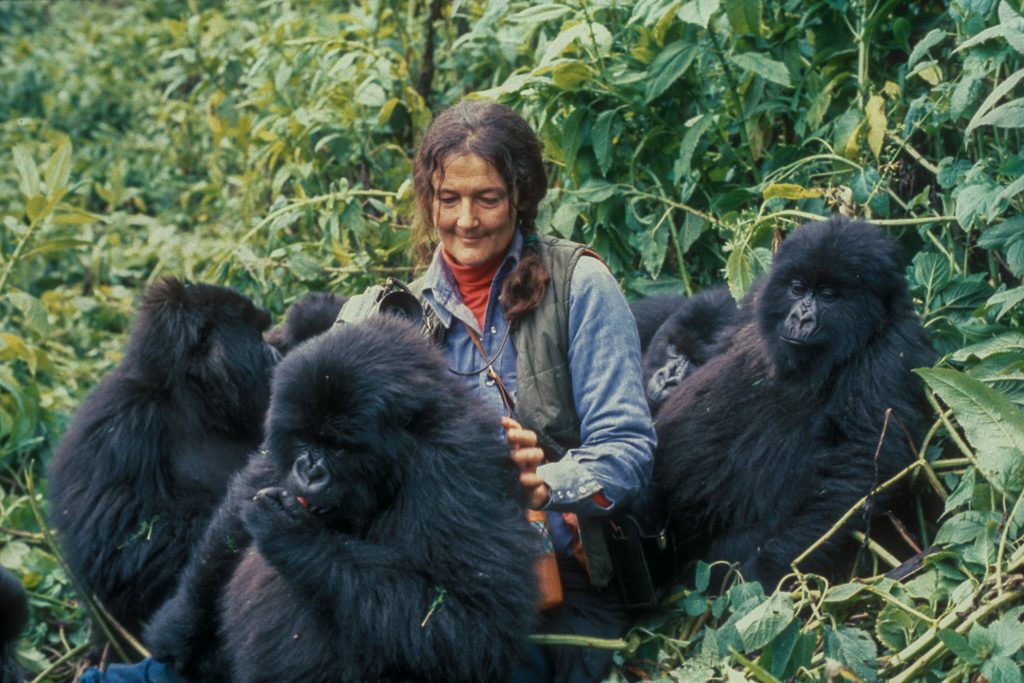
Decades before gorilla trekking became one of Africa’s most celebrated wildlife experiences, Dian Fossey was living and working in these rugged volcanic mountains. She spent years patiently observing gorilla families, documenting their social structures, and defending them against escalating threats of poaching and habitat destruction. Her groundbreaking research transformed global perceptions of gorillas and laid the scientific and ethical foundation for the conservation strategies that continue to protect them today.
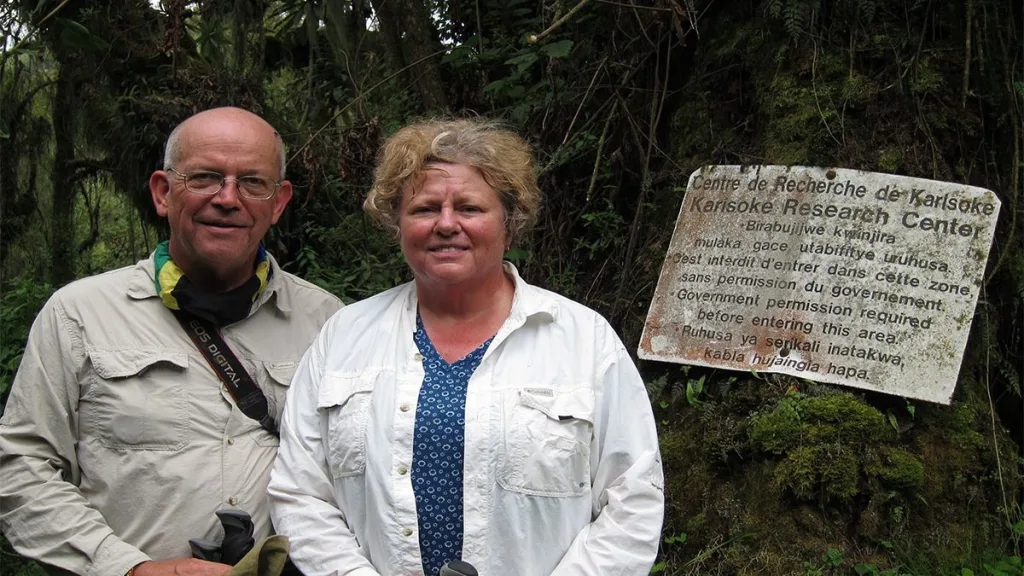
 Reaching the grave site requires a guided hike through bamboo forests, misty ridges, and dense montane rainforest to the former location of the Karisoke Research Center. The trek is both physically invigorating and emotionally profound. For many visitors, standing at this remote memorial transforms a wildlife adventure into a deeply meaningful conservation pilgrimage.
Between Fire and Forest: The Sacred Volcano Slopes Where History Rests
The Dian Fossey Grave Site is dramatically located between Mount Karisimbi and Mount Bisoke, two majestic volcanoes rising from the Virunga mountain chain. This extraordinary setting is defined by volcanic soils, lush rainforest vegetation, and a cool mountain climate that shifts quickly between sunshine and drifting mist. The remote location was deliberately chosen by Fossey in 1967 when she established the Karisoke Research Center in the saddle between these two towering peaks.
The isolation served a purpose. It allowed Fossey to remain close to several habituated gorilla families while minimizing outside disturbance. The surrounding terrain, though breathtaking, is rugged and demanding. Steep slopes, thick bamboo stands, and high-altitude conditions made daily research physically challenging. Yet it was precisely this remoteness that preserved the integrity of her work.
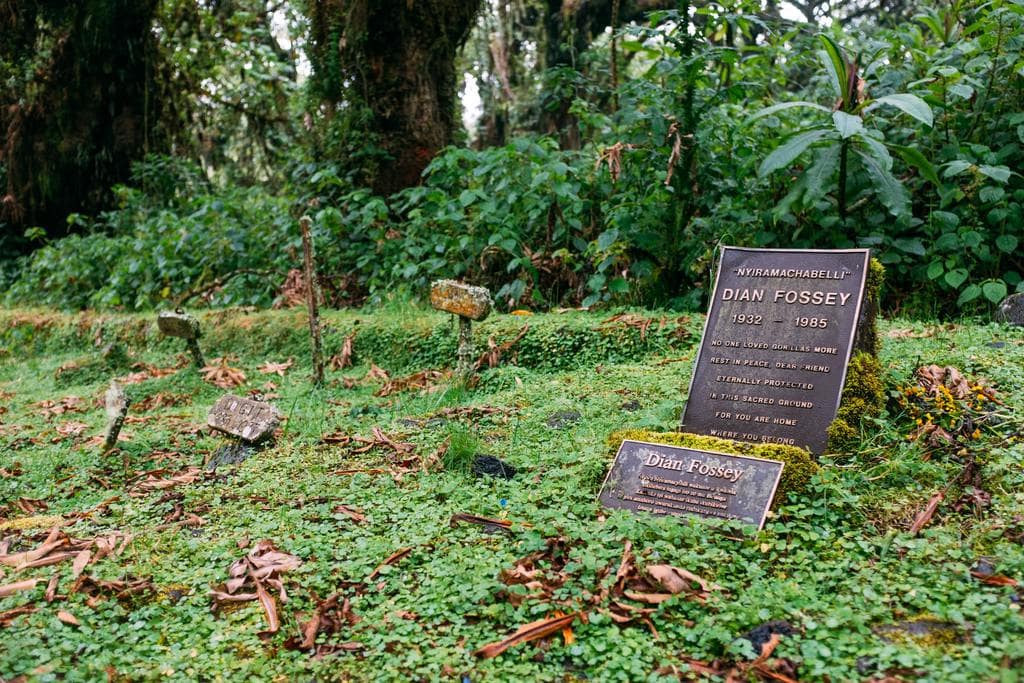
Today, while the original research cabins have long disappeared, the forest clearing remains intact. The grave site is modest — a simple stone marker surrounded by the graves of several gorillas. The setting feels sacred, with the silence broken only by birdsong and the rustle of leaves. The dramatic volcanic backdrop serves as a reminder of the wild environment Fossey fought so passionately to protect.
Dian Fossey Grave Hike
The Fearless Woman Who Gave Gorillas a Voice
Dian Fossey was more than a primatologist; she was a visionary whose determination reshaped global wildlife conservation. Arriving in Rwanda in the 1960s, she immersed herself fully in gorilla habitat, spending nearly 18 years observing, documenting, and living alongside mountain gorillas. Through patience and persistence, she gained their trust, allowing her to record intimate details of their social bonds, communication methods, and family hierarchies.
At the time, gorillas were widely portrayed as aggressive and dangerous animals. Fossey’s groundbreaking research revealed a completely different truth — that they were gentle, intelligent, and deeply social beings. Her findings challenged misconceptions and shifted public perception worldwide.
Beyond her scientific contributions, Fossey became a vocal and uncompromising advocate against poaching. As illegal hunting escalated, she intensified her anti-poaching patrols and exposed wildlife trafficking networks. Her activism drew international attention and funding, strengthening conservation efforts across the region.
Following her tragic death in 1985, she was buried at Karisoke beside Digit, a silverback gorilla she had studied closely. Her grave stands as a testament to her unwavering courage and the extraordinary bond she formed with the species she devoted her life to protecting.
Through Bamboo and Mist: The Hike That Tells a Story
The journey to the Dian Fossey Grave Site begins at the Kinigi headquarters of Volcanoes National Park. After a detailed ranger briefing, visitors drive to the base of Mount Bisoke, where the hike officially begins. The trek typically takes between four and six hours round-trip, depending on pace, trail conditions, and weather.
The path initially crosses cultivated farmland before gradually entering dense bamboo forest. As hikers ascend toward approximately 3,000 meters above sea level, the environment transforms into thick Hagenia woodland and mist-covered ridges. The air grows cooler, and the forest becomes quieter, creating a contemplative atmosphere.
The terrain can be steep and muddy, particularly during Rwanda’s rainy seasons. However, the presence of knowledgeable ranger guides enhances the experience. Along the way, they recount stories of Fossey’s daily routines, her interactions with gorilla families, and the hardships she endured while conducting research in isolation.
Reaching the memorial clearing feels both triumphant and humbling. The simplicity of the stone grave, surrounded by towering trees and volcanic slopes, invites quiet reflection. Many visitors describe the moment as deeply emotional and profoundly inspiring.

Ready for the Climb? Fitness, Gear & Smart Preparation
The Dian Fossey hike requires moderate physical fitness due to the steady elevation gain and uneven terrain. While it does not demand technical climbing skills, hikers should be prepared for a sustained uphill walk in varying weather conditions.
Proper footwear is essential. Sturdy hiking boots with strong grip provide stability on muddy and sometimes slippery trails. Long-sleeved clothing and trousers protect against stinging nettles and dense vegetation. Gloves are particularly useful for gripping branches during steeper sections of the ascent.
Given the high-altitude environment, carrying sufficient drinking water is crucial. A waterproof jacket is strongly recommended, as rainfall can occur unexpectedly even during dry seasons. Sunscreen and a hat can also be helpful during clear mornings.
Visitors may choose to hire a porter at the park headquarters, which not only eases the physical load but also supports the local community. With thoughtful preparation and a steady pace, most reasonably fit travelers complete the hike successfully and comfortably.
More Than a Visit: Why This Experience Stays With You
While gorilla trekking offers unforgettable wildlife encounters, visiting the Dian Fossey Grave Site adds powerful historical and emotional depth to the experience. Observing gorillas in their natural habitat is extraordinary, but understanding the conservation journey that made such encounters possible provides a deeper appreciation.
The memorial site connects travelers to the roots of Rwanda’s conservation success. Fossey’s dedication helped establish the principles of regulated tourism, scientific monitoring, and anti-poaching patrols that continue to protect mountain gorillas today.
Standing at her grave offers perspective. The modest stone marker contrasts with the immense global impact of her work. Visitors often leave with renewed respect for conservation efforts and a greater awareness of how tourism revenue supports wildlife protection.
The panoramic views of misty volcano slopes further enhance the visit, blending natural beauty with reflection. For many, the hike becomes one of the most meaningful moments of their Rwanda safari.
 Chasing Clear Skies or Emerald Forests: When Is the Best Time to Go?
The Dian Fossey hike operates year-round, with each season offering distinct advantages. The dry seasons, typically from June to September and December to February, provide firmer trails and clearer views across the volcanic landscape. These months are often considered ideal for trekking due to easier walking conditions.
The rainy seasons, from March to May and October to November, bring heavier rainfall and muddier paths. However, the forest becomes exceptionally lush and vibrant during this period. The mist creates dramatic scenery, and visitor numbers may be slightly lower.
Regardless of season, early booking is highly recommended, particularly during peak gorilla trekking months. Permits are limited to preserve the ecosystem and ensure sustainable tourism practices.
The cool mountain climate, combined with ever-changing weather patterns, gives the hike a dynamic character throughout the year.
From One Woman’s Mission to a Global Conservation Success Story
Since Dian Fossey’s era, mountain gorilla populations have gradually increased due to sustained conservation funding and strict management policies. Revenue generated from gorilla trekking permits directly supports ranger patrols, veterinary interventions, habitat preservation, and community development initiatives.
The Karisoke Research Center continues operating under conservation partnerships, maintaining long-term scientific research and monitoring programs. Modern researchers build upon Fossey’s original fieldwork, ensuring that data-driven strategies guide protection efforts.
The recovery of mountain gorillas stands as one of Africa’s most inspiring conservation achievements. What was once a critically endangered population has shown measurable growth, demonstrating the power of collaboration between researchers, governments, and responsible tourism.
Standing at Fossey’s grave reinforces the connection between past sacrifice and present success. It is a reminder that conservation progress requires persistence, passion, and global support, values that continue to shape Rwanda’s wildlife protection efforts today.
Walk in Her Footsteps: Plan Your Dian Fossey Experience
Combining gorilla trekking with a Dian Fossey hike creates a powerful and well-rounded Rwanda safari experience. Careful planning ensures permits, accommodation near Kinigi, and transfers from Kigali are arranged seamlessly.
For travelers seeking more than adventure, for those seeking connection and understanding, this hike offers a meaningful journey into Rwanda’s conservation heart.