
Kwitonda Gorilla Family: A Journey of Migration, Survival, and Strength
Kwitonda Gorilla Family, Deep within the misty forests of Volcanoes National Park lives one of the most fascinating mountain gorilla families in Africa, the Kwitonda group. Known for moving across steep and rugged terrain, this group has a unique story shaped by survival, adaptation, and strong social bonds. Their journey reflects resilience in the wild and the success of conservation efforts in Rwanda.
The Kwitonda family is more than just a group of primates. It is a close community that adapts to changing environments while maintaining strong relationships. Watching them gives a clear view of how mountain gorillas live, interact, and protect one another in their natural habitat.
This article explores the Kwitonda group in detail, including their origin, habitat, behavior, and trekking experience. It also compares them to other groups like the Karisimbi family and explains the main physical features of eastern gorillas in simple and clear language.

The Origin and Migration of the Kwitonda Gorilla Family
The Kwitonda gorilla family has a story that sets it apart from many other groups in Rwanda. Originally, this group lived in Virunga National Park in the Democratic Republic of Congo. In 2003, they migrated across the border into Rwanda, eventually settling in Volcanoes National Park they are known as gentle migrants because of this. This migration was unusual, as gorilla groups often remain within stable home ranges for long periods.
The name “Kwitonda” means “humble one,” a tribute to the group’s original dominant silverback, Kwitonda. He was known for his calm and gentle leadership style. After his death in 2012, leadership passed to another strong silverback named Akarevuro, who continues to guide the group today.
The migration shaped the group’s behavior. Unlike many gorilla families that stay within a fixed area, the Kwitonda group tends to roam widely. This makes them one of the more unpredictable families in the park. Their movement reflects both their history and their ability to adapt to new environments.
Today, the Kwitonda group is a symbol of cross-border conservation success. Their journey from Congo to Rwanda highlights how wildlife does not follow human boundaries and why regional cooperation is essential for protecting endangered species.
Habitat and Range across the Volcanoes
The Kwitonda gorilla family is most commonly found on the slopes of Mount Muhabura, one of the stunning volcanoes in the Virunga range. However, their home range is not limited to a single mountain. They frequently move between Mount Sabyinyo and Mount Gahinga, creating a wide and dynamic territory.
Because of their migratory nature, this movement pattern makes them one of the most challenging gorilla families to track.
The terrain they inhabit is dense and often steep. Thick vegetation, high altitude, and changing weather conditions add to the difficulty of reaching them. Yet, these conditions also provide a rich environment with plenty of food, including bamboo shoots, leaves, and fruits.
Trackers usually locate the group early in the morning before visitors begin their trek. This ensures that tourists have the best chance of finding them, even though their exact location changes daily. Their ability to thrive across multiple mountains shows how adaptable and strong they are as a group.

Group Size, Leadership, and Social Structure
The Kwitonda gorilla family is considered a large group, typically consisting of around 20 to 28 members. This includes several adult females, juveniles, infants, and multiple silverbacks. Having more than one silverback is important, as it helps maintain stability and protection within the group.
The current leader, Akarevuro, plays a key role in guiding the family. As a silverback, he is responsible for making decisions, protecting the group, and maintaining harmony. Leadership among gorillas is not just about strength; it also requires calm behavior and the ability to resolve conflicts.
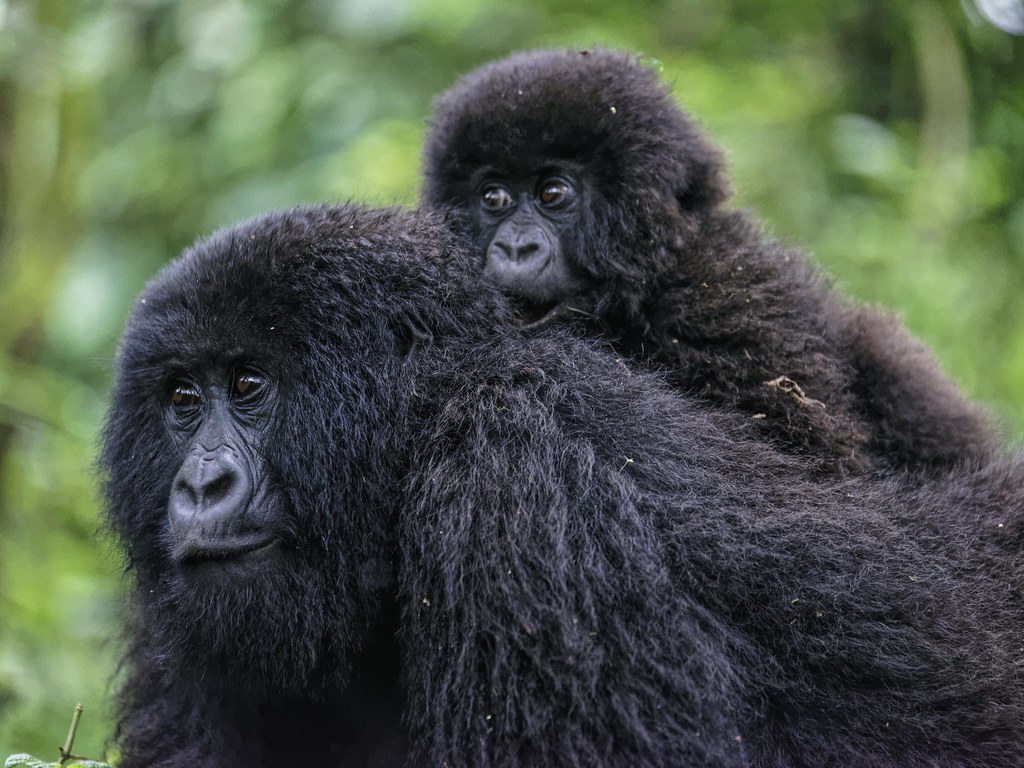
Young gorillas in the group learn by observing adults. For example, they watch how mothers care for infants or how silverbacks respond to threats. This learning process helps maintain the group’s structure across generations.
The presence of multiple silverbacks like Kigoma, Akarevuro, and formerly Magumu which aids in stability, especially following the 2021 split that adds depth to the group’s social system. While one is dominant, others may support him or eventually form their own families. This creates a dynamic and evolving community.
The Kwitonda group’s size and structure make it especially interesting for researchers and visitors. It offers a clear view of gorilla social life, from playful interactions among young ones to the protective instincts of adult males.
Physical Features of Eastern Gorillas
The Kwitonda family belongs to the eastern gorilla species, one of the largest primates on Earth. These gorillas are powerful yet gentle, with distinct physical traits that make them easy to recognize.
Mountain gorillas have large heads, broad chests, and long, strong arms. Their faces, hands, feet, and chest are mostly hairless, while the rest of their body is covered in thick fur. The fur is mainly black, although it can vary slightly depending on the subspecies.
Adult males develop a silvery patch of hair on their backs as they age. They are known as silverbacks for this reason. The hair turns white over time, similar to how human hair becomes gray with age.
A full-grown male can weigh between 140 and 205.5 kilograms and stand about 1.7 meters tall when upright. Females are smaller but equally agile.
Mountain gorillas are also slightly smaller but remain larger than western lowland gorillas. These physical features are not just for appearance. They help gorillas survive in cold, high-altitude forests and move efficiently through dense vegetation.
The Trekking Experience: A True Adventure
Trekking to see the Kwitonda gorilla family is one of the most exciting wildlife experiences in Rwanda. However, it is also considered one of the more challenging treks in Volcanoes National Park.
The difficulty comes from the group’s tendency to move frequently. They often travel through thick forests and up steep slopes, which can make the hike long and physically demanding. Visitors should be prepared for changing conditions, including mud, rain, and high altitude.
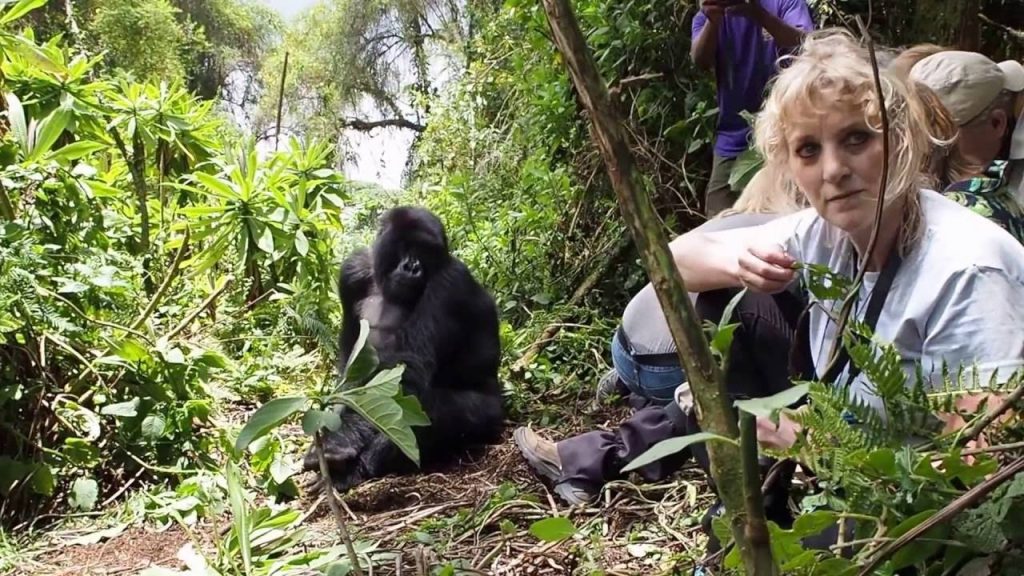
Despite the challenge, the reward is unforgettable. Spending even one hour with the Kwitonda group offers a rare glimpse into their daily lives. You may see mothers caring for infants, juveniles playing, or a silverback calmly observing his surroundings.
Guides and trackers play a vital role in the experience. They ensure safety while also sharing knowledge about the gorillas and their environment. Their expertise makes it possible to locate the group even when they move far from their previous location.
For many visitors, the trek becomes a personal journey. It combines physical effort with emotional connection, creating memories that last a lifetime.
Comparison with the Karisimbi Gorilla Group
While the Kwitonda family is known for its movement across multiple mountains, the Karisimbi group offers a slightly different experience. This large group frequently roams the lower slopes of Mount Muhabura, often in more open forest areas.
The Karisimbi group is also large and active, making it popular among visitors. However, their tendency to stay in more open areas can make them slightly easier to observe compared to the Kwitonda group.
In contrast, the Kwitonda family often moves into thicker and higher-altitude forests. This adds to the challenge but also enhances the sense of adventure. Visitors who trek the Kwitonda group often feel a deeper sense of accomplishment due to the effort required.
Both groups highlight the diversity of gorilla behavior within the same park. While one may offer easier viewing, the other provides a more rugged and unpredictable experience. Together, they show how adaptable gorillas are to different environments.
Conservation and the Future of the Kwitonda Family
The survival of the Kwitonda gorilla family is closely linked to conservation efforts in Rwanda. Mountain gorillas were once critically endangered, but their numbers have slowly increased thanks to protection programs.
Volcanoes National Park plays a key role in this success. Strict rules, guided tourism, and community involvement help ensure that gorillas are safe from threats such as poaching and habitat loss.
The story of the Kwitonda group also shows the importance of cross-border conservation. Since they migrated from Congo, their protection depends on cooperation between countries.
Tourism also supports conservation. Fees from gorilla trekking help fund park management and provide income for local communities. This renders protecting animals more inspiring
Looking ahead, the future of the Kwitonda family depends on continued efforts to preserve their habitat and maintain responsible tourism. With proper care, this remarkable group will continue to thrive for generations.
Conclusion: A Living Symbol of Strength and Harmony
The Kwitonda gorilla family stands as a powerful example of resilience in the wild. From their migration across borders to their life on the slopes of volcanic mountains, they represent adaptability and strength.
Their story is not just about survival. It is also about connection—between gorillas, their environment, and the people who work to protect them. Whether you are a researcher, a traveler, or a nature lover, the Kwitonda group offers a meaningful and unforgettable experience.
In the heart of Volcanoes National Park, among misty forests and towering volcanoes, the Kwitonda gorillas continue to live, move, and thrive. Their presence reminds us of the beauty of nature and the importance of protecting it.