
How Can We Help Mountain Gorillas
How Can We Help Mountain Gorillas, although the desire to connect with one of our nearest relatives is instinctive, such close interaction with this endangered species is not beneficial for its welfare. Disease transmission through human contact poses a considerable threat to mountain gorillas, with some individuals being ill due to their proximity to humans. Consequently, tourism and the endeavors of scientists and researchers are essential for the species’ survival.
Mountain gorillas, previously classified as critically endangered and at risk of extinction, have recently been reclassified to the endangered species list by the International Union for Conservation of Nature (IUCN) due to conservation efforts. Mountain gorillas are an endemic species of the Albertine region and the Bwindi forest, with just two locations globally where they may be encountered.
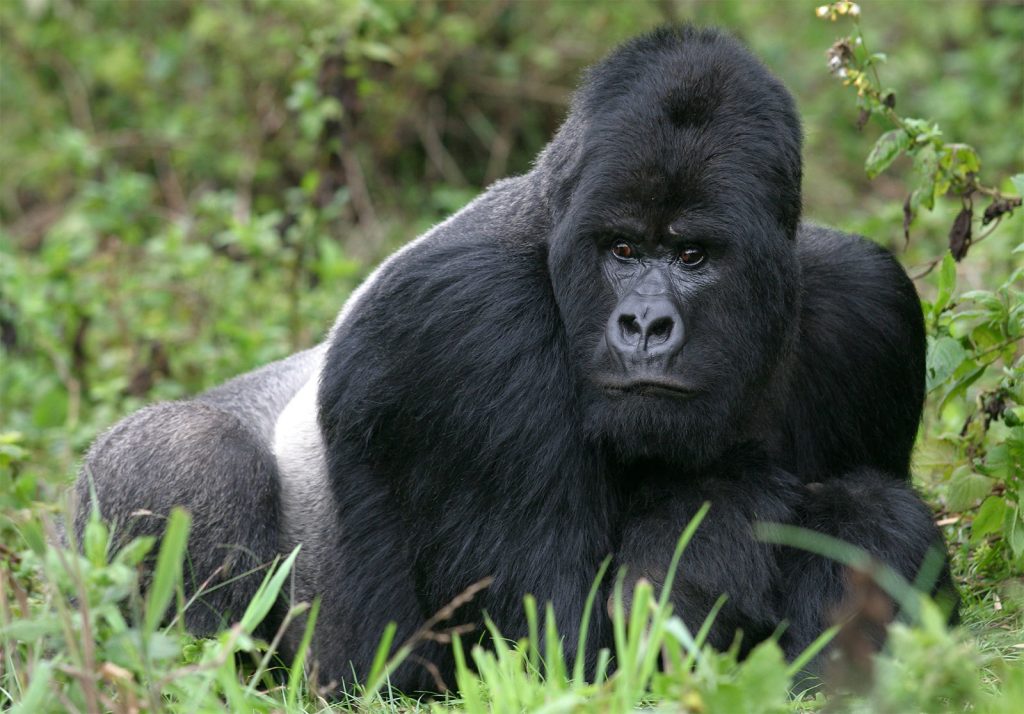
Mountain gorillas can be observed in 4 national parks located in Rwanda, Uganda, and the Democratic Republic of the Congo: Bwindi Impenetrable Forest, Mgahinga Gorilla National Park, Volcanoes National Park, and Virunga National Park. The latest census indicates approximately 1,063 mountain gorillas inhabit the region and globally, as these gorillas can only thrive in the wild, unlike lowland gorillas, which are present in various zoos worldwide.
Mountain gorillas share up to 99 percent of their DNA with humans. The population of mountain gorillas is on the rise, with an increasing number of infants being integrated into all national parks. This positively impacts mountain gorillas, and there are numerous ways you, as an individual, may contribute to the species’ survival and prosperity.
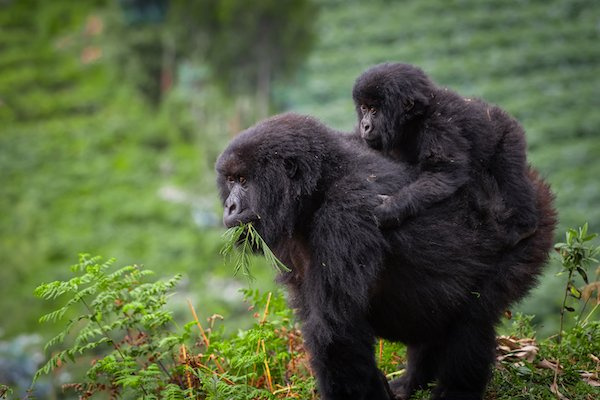
How Can We Help to Save the Mountain Gorillas
Embark on a trek to observe mountain gorillas in Rwanda, Uganda, and the Congo.
Mountain gorillas might have become extinct had gorilla tourism not existed. The habitats of mountain gorillas are inhabited by the most densely populated human communities in Africa. The predominant inhabitants of these regions are farmers; so, land is vital to their existence. To conserve the gorillas, the governments of Rwanda, Uganda, and the Democratic Republic of the Congo have prohibited cultivation in the gorillas’ volcanic habitat, primarily because the revenue from tourism exceeds the benefits of alternative uses of the park land. Gorilla trekking permits are costly ($400 in the Democratic Republic of the Congo, $800 in Uganda, and $1500 in Rwanda); however, acquiring them grants a unique opportunity to engage with this captivating species while simultaneously fostering economic incentives for their conservation.
Postpone your gorilla safari if you are not in good health.
Due to their genetic proximity to humans, mountain gorillas are vulnerable to numerous viral diseases that impact humans. Mountain gorillas are immunologically naive to certain diseases, rendering them more susceptible to specific human ailments due to their historical isolation from humans. Research conducted by the Gorilla Doctors and other specialists indicates that mountain gorillas have succumbed to diseases transmitted by humans. Following trauma, infectious diseases represent the primary cause of mortality in mountain gorillas. The most common infection is respiratory sickness, ranging from a mild cold to a severe case of pneumonia. To save gorillas against infections, national park officials advise that individuals who are unwell or have a fever abstain from gorilla trekking.
Maintain a distance of 7 meters from mountain gorillas.
To mitigate the risk of disease transmission and to avoid altering the gorillas’ natural behavior, the Gorilla Doctors partnered with national park authorities to establish a regulation mandating a minimum distance of 7 meters (21 feet) from the gorillas. Young gorillas are oblivious to the laws and may approach guests; nonetheless, tourists should endeavor to retreat and refrain from physical contact with the animal whenever feasible. Gorillas must adhere to the 7-meter restriction at all times, even when they exit the national park and enter areas occupied by tourist hotels and camps.
Contribute to Gorilla Conservation Organizations
Contributing funds to organizations actively engaged in the conservation of mountain gorillas is among the most effective means of supporting the species. Numerous organizations, such as the Gorilla Fund and the Dian Fossey Foundation, have dedicated decades to investigating effective methods for the protection of mountain gorillas, primarily relying on grants and donations for their support.
When donating to a cause, it is essential to evaluate the organization you intend to support to determine its effectiveness in achieving its goals. One should be capable of acquiring responses to inquiries such as, “What strategies does the organization employ to attain its articulated objectives?” “Does the organization possess any data or statistics indicating that its strategies are effective?”
Engage in extra activities during your gorilla trekking expedition.
A large percentage of visitors to gorilla national parks spend merely one or two days trekking gorillas before departing. Nonetheless, all gorilla parks offer remarkable nature experiences. Similar to gorilla trekking, the revenue generated by these activities motivates governments and local populations to preserve mountain gorilla habitats. Ascend the active Nyiragongo volcano in the Democratic Republic of the Congo, which houses the largest lava lake globally. Ascend extinct volcanoes in Rwanda and Uganda, including the snow-capped summits of Mt. Karisimbi and the serrated peaks of Mt. Sabyinyo. Rwanda and Uganda provide opportunities to watch golden monkeys, a critically endangered primate. In Rwanda, visitors can also tour Dian Fossey’s cemetery and former research station, “How Can You help to Save Mountain Gorillas.”
Promote small businesses and community initiatives within Gorilla National Parks.
Despite the efforts of governments and conservation organizations to protect gorillas, the involvement of local communities next to the parks is essential for safeguarding gorilla habitats and assuring the protection of mountain gorillas. The greater the number of residents benefiting from tourism revenues and NGO and community initiatives in the region, the more inclined they are to desire the conservation of mountain gorillas. Tourists can support local restaurants, shops, and other enterprises, or contribute to community activities across the park. Tourists may pay to visit the Iby’iwacu Cultural Village in Volcanoes National Park, Rwanda, where former poachers serve as cultural interpreters and entertainers.
Stay away from buying any jewelry crafted from gorilla parts.
Although poachers infrequently target mountain gorillas, other species within the national parks inhabited by gorillas are regularly subjected to poaching. Poachers typically employ snares to capture small antelopes for nutrition for their families, however larger animals like buffalo or elephants are occasionally pursued. Poachers’ traps intended for other species often ensnare gorillas.
Moreover, the existence of poachers in the forest disturbs the ecosystem and increases the risk of zoonotic disease transmission. The principal objective of poaching is to acquire bush meat, however wild animal skins, bones, and ivory may also be employed in crafts and other tourism-related products. If you have any uncertainties about a product’s origins, refrain from purchasing it. Furthermore, if you observe or become aware of an individual selling a live wild animal, notify the national park authorities.
Reserve a gorilla trekking safari with a trusted tour operator.
When seeking gorilla tour packages, select a firm that allocates a portion of its revenue to conservation initiatives. Examine Explore Rwanda Tours, which offers 8-day itineraries that feature an engagement with the Gorilla Doctors and allocates a portion of the trip cost to the national park and adjacent local communities. In the Democratic Republic of the Congo, packages encompassing permits, transportation, and accommodations can be organized directly with Virunga National Park, with all revenues reinvested into the park.
Promote awareness of gorilla trekking and gorilla conservation efforts.
Individuals may assist the gorillas by educating their friends, family, and colleagues about mountain gorillas and the conservation initiatives undertaken to protect them. Despite their critical endangerment, mountain gorillas have a positive outcome! Mountain gorillas are the sole non-human great ape subspecies experiencing population growth. When Dian Fossey commenced her research on gorillas in the mid-1980s, the population was recorded at fewer than 250 individuals; however, it now approaches 800 specimens. If we persist in tackling conservation challenges, this species has a viable opportunity for survival.
Adhere to the Guidelines and Procedures of Gorilla Trekking
The ranger guides will instruct all trekkers on the necessary code of conduct while in the forest before the mountain gorilla trekking. Each mountain gorilla family will be restricted to 8 individuals to prevent discomfort due to human involvement. Trekkers are required to maintain a low volume, observe a distance of 6 meters, and abstain from feeding the mountain gorillas. By complying with these restrictions, you are preserving the mountain gorillas in their natural environment. By using the aforementioned strategies, you can save the mountain gorillas. Reach out to us if you wish to arrange a gorilla vacation to volcanoes National Park