
Endangered Mountain Gorillas of Volcanoes National Park
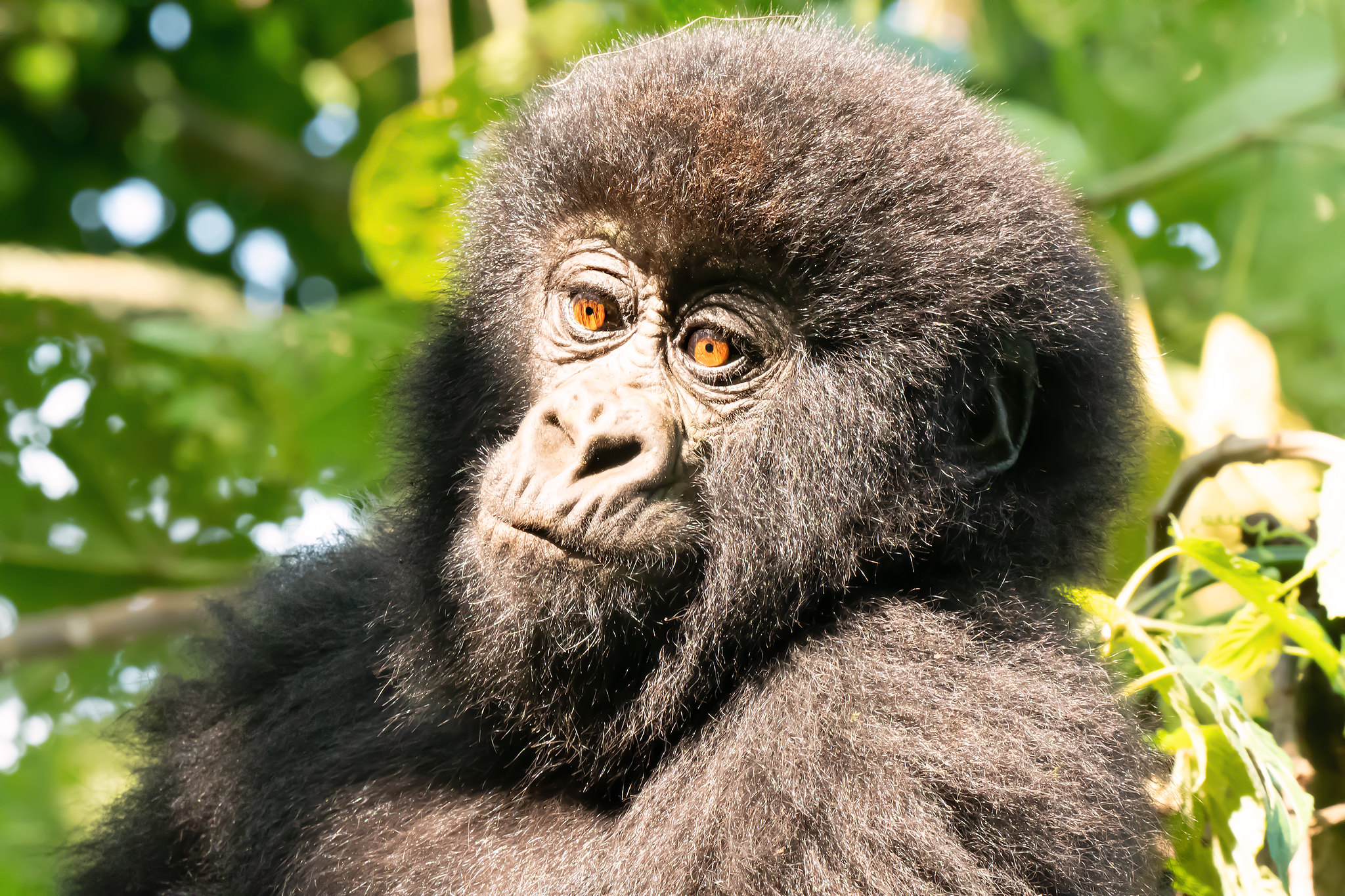
Endangered Mountain Gorillas of Volcanoes National Park, Somewhere high among the mist‑shrouded ridges of the Virunga Volcanoes, in northern Rwanda, lives one of our planet’s most majestic and most vulnerable creatures. The endangered mountain Gorilla. The park is more than just a wildlife reserve; it’s a living story of resilience, conservation, and the fragile relationship between humans and nature. These mountain gorillas, scientifically known as Gorilla beringei beringei, are one of the rarest primates on Earth, and Rwanda has become a global leader in their protection.

A Living Treasure in the Virunga Mountains
Mountain Gorillas are a subspecies of the eastern gorilla, found only in two main areas: the Virunga Massif (spanning Rwanda, Uganda, and the Democratic Republic of Congo) and Uganda’s Bwindi Impenetrable National Park. Unlike their lowland relatives, mountain gorillas cannot survive in captivity, making their conservation in the wild absolutely critical.
Volcanoes National Park, established in 1925, is Africa’s first national park and was created initially to protect these gorillas. The park’s mist-shrouded slopes, covered in bamboo and dense forest, provide a haven for over a third of the world’s remaining mountain gorillas. With an estimated global population just over 1,000 individuals, each group within the park represents an invaluable piece of biodiversity.
Who They Are: The Mountain Gorilla, Their Lives, and Their Society
Mountain Gorillas are one of the two subspecies of eastern gorillas. They are distinguished by their thick black fur, shorter arms relative to some lowland gorillas, and adaptations for cooler, higher‑altitude life — for instance denser coats and large lungs to cope with lower oxygen at elevation.
Socially, gorillas live in family groups (often called “troops” or “families”) led by a silverback male, which is the adult male with a distinctive patch of silver fur on his back. A family may have multiple females, juveniles, infants, and sometimes subordinate males. When males mature, some will split off to form their own groups. Close bonds form among mothers and infants, among siblings; grooming, play, communication (grunts, chest beats, and gestures) are all part of daily life.
Reproduction is slow: females typically have their first offspring at around 10 years old; a gestation of ~8.5 months; infants are small and dependent for a long time. This means population growth is necessarily gradual, making threats all the more dangerous.
Threats: What Mountain Gorillas Face
Despite the gains, mountain gorillas remain endangered. Their survival depends on continuous, careful management. The threats are many, complex, and often interconnected.
Disease
Disease is a particularly acute risk. Gorillas share many vulnerabilities with humans—respiratory infections, gastrointestinal diseases, etc. A single disease outbreak could have devastating effects. This is why guidelines (such as keeping distance, limiting exposure, health checks, etc.) are strictly enforced.
Habitat Loss & Fragmentation
Forests around their range are under pressure. Agricultural encroachment—villages expanding, land cleared for farming, wood harvested for fuel—reduces the area gorillas can use. As habitat shrinks or becomes fragmented, gorilla groups have less space, food becomes scarcer, and population growth is stymied.
Human‑Wildlife Conflict
Farmers near the borders of the park may lose crops to gorillas wandering outside. In turn, there can be retaliation, poaching, or setting traps meant for other wildlife. Also, close human settlement increases the likelihood of disease transmission from humans to gorillas.
Poaching and Traps
Although killing a gorilla is rare and met with strict penalties, gorillas can get accidentally caught in snares or traps set for other animals. There is also the threat from poaching of associated species, and from illegal logging.
Regional Instability
In parts of the broader Virunga region (especially in DRC), political instability, conflict, displacement all complicate conservation. These can disrupt monitoring, reduce ability to patrol or enforce protection, and increase illegal activity. (While Rwanda itself is relatively stable, the gorillas don’t respect international borders, and threats across borders affect populations.)
Conservation Success Stories in Rwanda
Despite their endangered status, mountain gorillas are one of the rare conservation success stories in Africa. Thanks to strong government commitment, international partnerships, and community involvement, their numbers have steadily risen over the past three decades.
Anti-Poaching Patrols
Rwanda has invested heavily in ranger programs, which include daily monitoring of Gorilla groups. These rangers track the gorillas, remove snares, and protect against illegal activity. The close monitoring ensures quick medical intervention if gorillas are injured.
Community Engagement
A portion of the revenue from gorilla trekking permits in Rwanda is shared with local communities. This creates direct incentives for conservation: the gorillas are worth more alive than dead. Communities around Volcanoes National Park benefit from infrastructure development, schools, and health centers funded by tourism revenue.
The Gorilla Naming Ceremony (Kwita Izina)
Every year, Rwanda holds the Kwita Izina ceremony — a grand cultural and conservation event where newly born gorillas are given names. This tradition not only celebrates gorilla births but also raises awareness about their importance to Rwanda’s identity and economy.
International Support
Conservation organizations such as the Dian Fossey Gorilla Fund and the Rwanda Development Board have been instrumental in sustaining long-term protection programs. Their efforts ensure a collaborative approach between science, tourism, and local stewardship.
What You Can See & Experience When Visiting
If you visit Volcanoes National Park for Gorilla Trekking, here’s what the experience typically involves.
Permits: Trekking permits are required. There are around 10 fully habituated gorilla families available for trekking in Volcanoes NP. These groups are led by rangers and trackers who know their ranges.
Trekking: Early morning departure, forested slopes, and steep climbs if the group ranges high. The trek can last several hours depending on how far the gorilla family is. You’ll pass through bamboo, rainforest, moss‑covered trees, and streams. The air is often cool, damp, with mist and constant forest sounds. The trail can be muddy, steep, challenging. But the payoff—seeing a family of gorillas in the wild—is unforgettable.
Encounter: Once you find the gorillas, you typically get one hour with them. You observe their behavior: eating, resting, caring for young, travel, playing, interacting. It’s intimate and powerful. Photos are carefully regulated (flash, distance rules), voices kept low, visitors are usually asked to keep at least 7 meters away.
Other Attractions: Volcanoes NP offers more than gorillas — volcano hikes (Mt. Bisoke, Karisimbi), visits to the tomb and trails of Dian Fossey, golden monkey treks, cultural visits in nearby communities, twin lakes, etc. These give richness to the trip
Why It Matters: Beyond the Gorillas
Why should we care? Because saving the mountain gorilla is symbolic, ecological, social, and scientific.
Symbolism: They are almost anthropomorphic in their way of life. The way silverbacks protect the troop, the way mothers nurture, the way youngsters play — people see in gorillas something deeply human, something that calls for moral responsibility.
Biodiversity: The gorillas are a flagship species. Protecting them means protecting whole ecosystems — the high forests, water sources, the many other species (birds, insects, other mammals) that share that environment. Ecosystem services like water regulation, carbon sequestration, soil retention all benefit from intact forests.
Science & Learning: Researchers learn about primate behavior, genetics, disease resistance, social structure, ecological adaptation. Dian Fossey’s work, and subsequent research at Karisoke and other institutions, has deepened our understanding not just of gorillas but of conservation methods more broadly.
Economics & Community Welfare: Gorilla trekking is one of Rwanda’s marquee tourism attractions. It brings in revenue, creates jobs (rangers, guides, lodges, transport), infrastructure improvements, often spillover benefits into health, education, and local business. When managed well, this creates win‑win outcomes: humans benefiting without destroying the gorillas’ home.
Conclusion
Volcanoes National Park, Rwanda, is more than a destination—it’s a symbol. Its mountain gorillas embody both vulnerability and strength. They remind us what has almost been lost, what has been saved, and what remains at stake.
Endangered? Yes. But also hopeful. With every ranger patrol, every permit sold, every community uplifted, they move a little further from extinction. But the path is not free of threat. Continuity, vigilance, compassion, and wisdom are required now more than ever.
If you have the chance, to visit Volcanoes, to see those gorillas in the mist, let it be with humility, respect, and a commitment to leave the wild better than you found it. They deserve nothing less.