
Karisimbi Gorilla Group (Susa B): The Hidden Giants of Volcanoes National Park
Karisimbi Gorilla Group, Deep in the misty slopes of Volcanoes National Park lives one of the most intriguing mountain gorilla families in East Africa the Karisimbi Gorilla Group. Known first as Susa B, this group carries a powerful story of rivalry, survival, and adaptation that continues to fascinate researchers and wildlife enthusiasts. While many visitors focus on more accessible gorilla families, Karisimbi stands apart because of its remote lifestyle, high-altitude habitat, and complex social history that is still evolving today.
From dramatic leadership struggles to its home near Mount Karisimbi, this group offers insight into the deeper realities of gorilla life. It shows how groups form, break apart, and adjust to new environments under pressure. Their journey reflects the natural challenges that shape gorilla societies in the wild.
Understanding the Karisimbi group helps visitors and researchers appreciate the hidden side of mountain gorilla conservation and behavior. It highlights resilience, adaptation, and the importance of protecting fragile ecosystems where these rare animals continue to survive and thrive despite constant change.
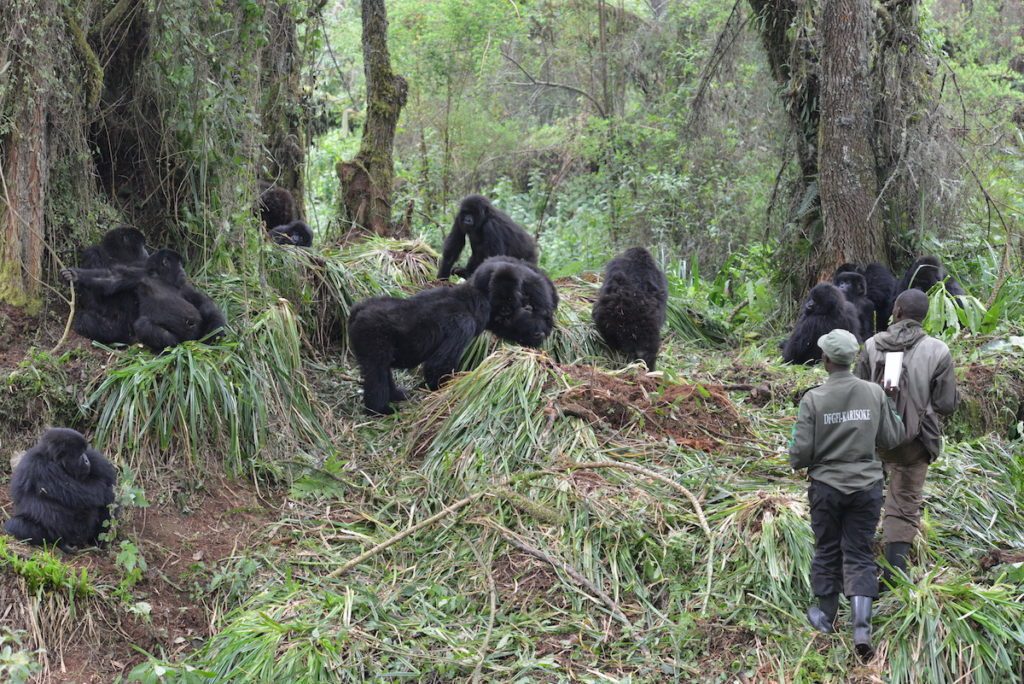 Origins of Karisimbi Gorilla Group (Susa B)
The Karisimbi Gorilla Group began as part of the famous Susa group, often referred to as Susa A. This large family once had over 40 members and was one of the most stable and well-known groups in the Virunga region. However, life within such a large group was not always peaceful. Competition among dominant males created tension over time.
Between 2008 and 2009, a major split began to take shape. A strong silverback named Nyagakangaga broke away with 13 members. The separation was not immediate. For nearly two months, individuals moved back and forth between the original group and the new one. These temporary returns showed uncertainty and hesitation among members.
The process became permanent on August 20, 2009. From that moment, the new group stood on its own. To differentiate it from the original Susa A, trackers gave it the designation Susa B. This name helped researchers monitor the transition and understand the group’s development. The formation of Susa B marked a significant moment in gorilla social history.
Leadership of Nyagakangaga
Nyagakangaga played a central role in the formation and survival of the Karisimbi group. Before the split, he was already a powerful figure within the Susa group. He became second in dominance after the death of a senior silverback in 2007. This position gave him influence but not full control.
His decision to break away was bold on 28th June, 2009. In gorilla society, leadership determines access to mates, feeding areas, and protection. Nyagakangaga showed strength by leading 13 individuals into a new and uncertain future. This move required confidence and the ability to maintain loyalty among group members.
As leader, he guided the group into higher and more remote areas. These regions offered safety from rival groups but also came with challenges. Food could be harder to find, and the terrain was more difficult to navigate. Despite this, he managed to keep the group stable.
Nyagakangaga’s leadership style reflects determination and resilience. He continues to influence the group’s movements and survival in a demanding environment.

From Susa B to Karisimbi Group
In 2010, Susa B was officially renamed the Karisimbi Group. This new name reflected the group’s strong connection to Mount Karisimbi, the highest peak in the Virunga Volcanoes. Rising to 4,507 meters, the mountain provides a unique habitat for wildlife.
The name change was important for identity. It marked the group’s transition from a temporary offshoot to a recognized and independent family. Living near Mount Karisimbi also shaped the group’s behavior and movement patterns. The high-altitude environment includes bamboo forests, thick vegetation, and cooler temperatures.
Unlike many other gorilla groups, Karisimbi chose to remain in these rugged areas. This decision reduced encounters with humans and other gorilla families. It also made tracking them more difficult. Their preference for remote zones gave them a reputation for being elusive.
The name Karisimbi now represents strength and adaptation. It connects the group to one of the most iconic landscapes in Central Africa and highlights their unique way of life.
Group Composition and Social Structure
The Karisimbi group has a small but unusual composition. It consists of ten individuals, including six silverbacks. This number of adult males is rare in a single gorilla family. The group also includes one adult female, one blackback, one subadult female, and one juvenile.
This structure creates a complex social environment. In most gorilla groups, one dominant silverback leads several females and their young. However, in Karisimbi, multiple silverbacks share space and influence. This can lead to competition and shifting alliances.
Nyagakangaga remains the dominant leader, but other males such as Kampade and Getty have shown strong presence. Their interactions can be tense, especially when competing for attention or control. These dynamics require constant balance to avoid conflict.
The small number of females also affects the group. It limits reproduction and increases competition among males. Despite these challenges, the group continues to survive and adapt. Their structure offers valuable insight into how gorilla societies function under pressure.

Internal Tensions and the Birth of Isimbi Group
Tensions within the Karisimbi group eventually led to another split. The presence of multiple strong silverbacks created ongoing competition. Nyagakangaga, Kampade, and Getty were at the center of these conflicts. Each showed signs of leadership ambition.
Over time, disagreements increased. Some members began to distance themselves from the main group. This gradual separation led to the formation of a new group known as Isimbi. The split reduced tension within Karisimbi but also changed its size and structure.
This event is a clear example of how gorilla groups evolve. Splits are a natural part of their social system. They allow new leaders to emerge and reduce pressure within crowded groups. In this case, the formation of Isimbi showed how internal conflict can lead to growth.
For researchers, such changes are important. They provide insight into leadership struggles and group dynamics. The Karisimbi group continues to be a key example of how mountain gorillas adapt to social challenges.
Habitat and Movement Patterns
The Karisimbi group is known for its wide and unpredictable movements. It mainly lives in Volcanoes National Park but often crosses into the Mikeno sector of Virunga National Park in the Democratic Republic of Congo.
This cross-border behavior makes the group unique. It shows how gorillas do not recognize human boundaries. Instead, they move based on food availability, safety, and environmental conditions. The slopes of Mount Karisimbi provide dense vegetation and fewer disturbances.
However, this habitat is difficult to access. The terrain is steep and covered in thick forest. Weather conditions can change quickly, making tracking challenging. For example, trackers may spend many hours searching without success.
Their movement patterns also reflect seasonal changes. During certain times, they move to areas with more food. This constant movement makes them less predictable than other groups. It also explains why they are rarely included in daily tourism activities.
Why Karisimbi Group Is Rarely Visited
The Karisimbi group is not commonly visited by tourists. Its remote location and unpredictable movements make it difficult to track on a daily basis. Tour operators prefer groups that stay within accessible areas. This increases the chances of successful trekking experiences.
Karisimbi often travels long distances and stays in high-altitude zones. These areas require more time and effort to reach. In some cases, trackers may not locate the group in time for tourist visits. This makes it unreliable for regular tourism schedules.
However, this limited exposure has benefits. The group remains less accustomed to human presence. This allows them to maintain more natural behaviors. For researchers, this provides valuable opportunities to study gorillas in a less disturbed environment.
For visitors, the idea of Karisimbi adds mystery to the park. Even without seeing them, knowing they exist in remote areas enhances the experience. It reminds people that wildlife is not always easy to find, and that is part of its beauty.

Conservation Significance
The Karisimbi group plays an important role in mountain gorilla conservation. Its formation and evolution show how gorilla populations grow and adapt. Splits like the one that created this group increase genetic diversity and reduce overcrowding.
Organizations such as the Dian Fossey Gorilla Fund continue to study groups like Karisimbi. Their research helps scientists understand behavior, movement, and social structure. These insights are essential for protecting gorillas in the wild.
The group’s cross-border movements also highlight the need for cooperation between countries. Conservation efforts in Rwanda and the Democratic Republic of Congo must work together. This ensures that gorillas can move freely and safely.
Protecting habitats near Mount Karisimbi is especially important. These high-altitude areas provide refuge for unique groups like Karisimbi. Their survival depends on strong conservation policies and continued research. The group stands as a symbol of resilience and the importance of protecting wildlife.