
Learn all about the different great ape species, where they
Learn all about the different great ape species, where they: When we think of the creatures that are most like us, our minds drift to the great apes our evolutionary cousins who share not only our DNA, but our emotions, intelligence, and complex social lives. Watching a Gorilla cradle her baby, or a chimpanzee solve a problem, is a striking reminder that we are not alone in our capacity to feel, think, and connect.
Great apes are some of the most fascinating and intelligent animals on our planet. Sadly, all great ape species are endangered or critically endangered, threatened by habitat loss, poaching, and climate change.
In this guide, you will learn all about the different great ape species, where they live, how they behave, and why they deserve our attention and protection.

What Are Great Apes?
Great apes are a group of primates that belong to the family Hominidae — a group that includes humans, chimpanzees, bonobos, gorillas, and orangutans. They are distinguished from other primates by their large brains, high intelligence, tool use, complex social structures, and the lack of tails. There are four genera and six recognized species of great apes:
- Chimpanzee (Pan troglodytes) Bonobo (Pan paniscus)
- Gorilla (Two species: Gorilla gorilla & Gorilla beringei)
- Orangutan (Three species: Pongo pygmaeus, P. abelii, P. tapanuliensis) Humans (Homo sapiens) yes, we’re great apes too.
1. Gorillas – The Gentle Giants
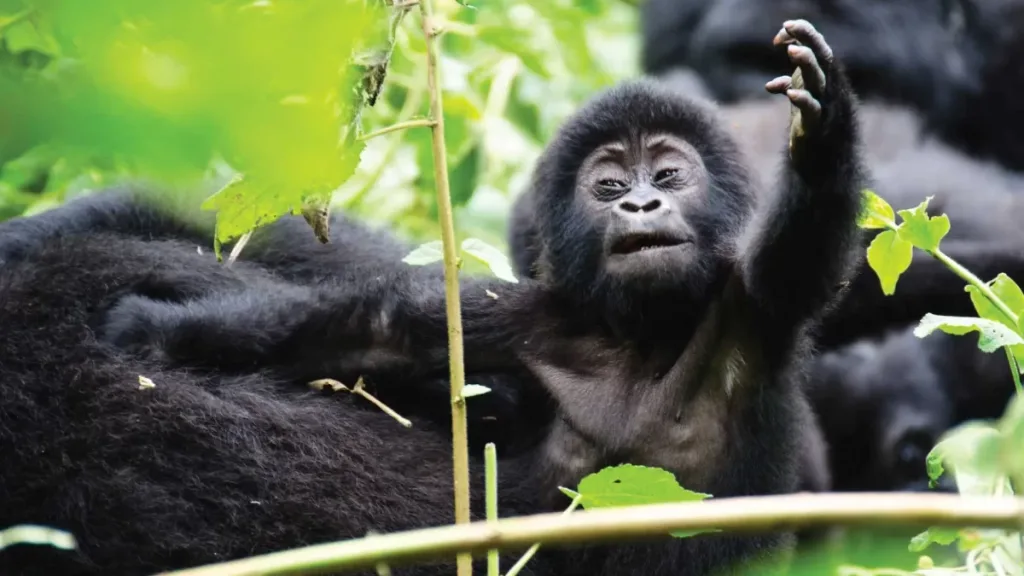
Gorillas are the largest of all primates and are divided into two species: Eastern Gorillas (Gorilla beringei) and Western Gorillas (Gorilla gorilla). Each species is further split into subspecies.
Eastern Gorillas include
Mountain Gorillas – found in the Virunga Mountains (Rwanda, Uganda, and the Democratic Republic of Congo).
Eastern Lowland Gorillas – found in the eastern Democratic Republic of Congo.
Western Gorillas include
Western Lowland Gorillas – the most widespread, living in Central and West Africa (Gabon, Republic of Congo, Cameroon, Equatorial Guinea).
Cross River Gorillas – found in small populations along the Nigeria-Cameroon border, and critically endangered.
Traits & Behavior
Gorillas are known for their strength and size, but also for their gentle nature. They live in family groups led by a silverback male, who protects and leads the troop. Gorillas are mostly vegetarian, feeding on leaves, shoots, and fruit.
Why They Matter
Gorillas play a crucial role as “gardeners of the forest,” spreading seeds and maintaining healthy ecosystems. They are also a conservation success story in some areas, especially mountain gorillas, whose numbers are slowly increasing thanks to protection efforts.
2. Chimpanzees – The Clever Toolmakers
Chimpanzees (Pan troglodytes) are one of our closest relatives, sharing about 98–99% of our DNA. They are found across 21 African countries, mainly in equatorial forests and savannas.
Traits & Behavior
Known for their intelligence, chimpanzees use tools such as sticks to extract termites, stones to crack nuts, and leaves to collect water.
They live in large, complex social groups called “communities,” which can number up to 100 individuals.
Chimpanzees are highly expressive, with rich vocalizations, gestures, and even facial expressions that communicate emotions.

Why They Matter
Chimps teach us a great deal about human evolution, culture, and communication. But they are endangered due to deforestation, poaching for bush meat, and disease outbreaks such as Ebola.
3. Bonobos – The Peaceful Apes
Bonobos (Pan paniscus), sometimes called the “forgotten apes,” are found only in the Democratic Republic of Congo, south of the Congo River. They are often confused with chimpanzees but have distinct physical and behavioral differences.
Traits & Behavior:
Bonobos are slightly smaller than chimps, with slender builds and darker faces.
They are famous for their peaceful, matriarchal societies where females hold significant influence.
Instead of resolving conflict through aggression, bonobos often use play and bonding behaviors.
Why They Matter
Bonobos are unique among great apes for their cooperative and nonviolent societies. Studying them provides insights into human social evolution and the possibility of peaceful coexistence. Unfortunately, they are critically endangered due to hunting and ongoing conflict in their habitat.
4. Orangutans – The Forest Dwellers of Asia
Unlike the other great apes, which live in Africa, orangutans (Pongo spp.) are found only in Southeast Asia. They are divided into three species:
Bornean Orangutan (Pongo pygmaeus) – found in Borneo.
Sumatran Orangutan (Pongo abelii) – found in northern Sumatra, Indonesia.
Tapanuli Orangutan (Pongo tapanuliensis) – discovered in 2017 and limited to a tiny population in Batang Toru, Sumatra.
Traits & Behavior
Orangutans are the most solitary of the great apes, with males often living alone while females care for offspring.
They are expert climbers, spending most of their lives in the forest canopy.
Known for intelligence, they also use tools and have been observed crafting sleeping nests each night from branches and leaves.
Why They Matter
Orangutans are critical to the rainforests of Asia, dispersing seeds and shaping the forest structure. Yet, they are among the most endangered apes, with palm oil plantations, logging, and habitat destruction pushing them to the brink of extinction.
Why Are Great Apes Endangered?
Every species of great ape is currently endangered or critically endangered. The threats they face are largely human-caused:
Habitat loss from logging, mining, agriculture, and infrastructure
Poaching for bush meat or illegal wildlife trade Disease, including those transmitted by humans Conflict zones, particularly in parts of Central Africa
The Threats Facing All Great Apes
Despite their differences, all great apes face similar challenges:
- Habitat Destruction. Expanding agriculture, logging, and mining are destroying the forests they depend on.
- Poaching. Great apes are hunted for bush meat, captured for illegal wildlife trade, or killed by snares.
- Disease. Shared genetic similarity with humans means they are highly vulnerable to human illnesses.
- Conflict & Instability. In regions like Central Africa, wars and unrest make conservation work difficult.
- Climate Change. Altered rainfall patterns and forest health directly affect their food sources and habitats.
Why Protecting Great Apes Matters
- Ecological role. Great apes are keystone species. By dispersing seeds and shaping vegetation, they keep ecosystems healthy.
- Scientific importance. They give us insights into our own evolution, behavior, and intelligence.
- Cultural and economic value: Gorilla and chimpanzee tourism generates vital revenue for local communities and national economies.
- Moral responsibility. As our closest relatives, their survival reflects humanity’s ability to protect biodiversity.
Where to See Great Apes in the Wild
Gorillas – Rwanda, Uganda, DR Congo, Gabon, Republic of Congo.
Chimpanzees – Tanzania (Gombe and Mahale Mountains), Uganda (Kibale), Rwanda (Nyungwe), and across Central Africa.
Bonobos – Democratic Republic of Congo (Lomako and Salonga). Orangutans – Indonesia (Sumatra, Borneo) and Malaysia (Sabah, Sarawak).
Conclusion
The great apes — gorillas, chimpanzees, bonobos, and orangutans — are extraordinary beings
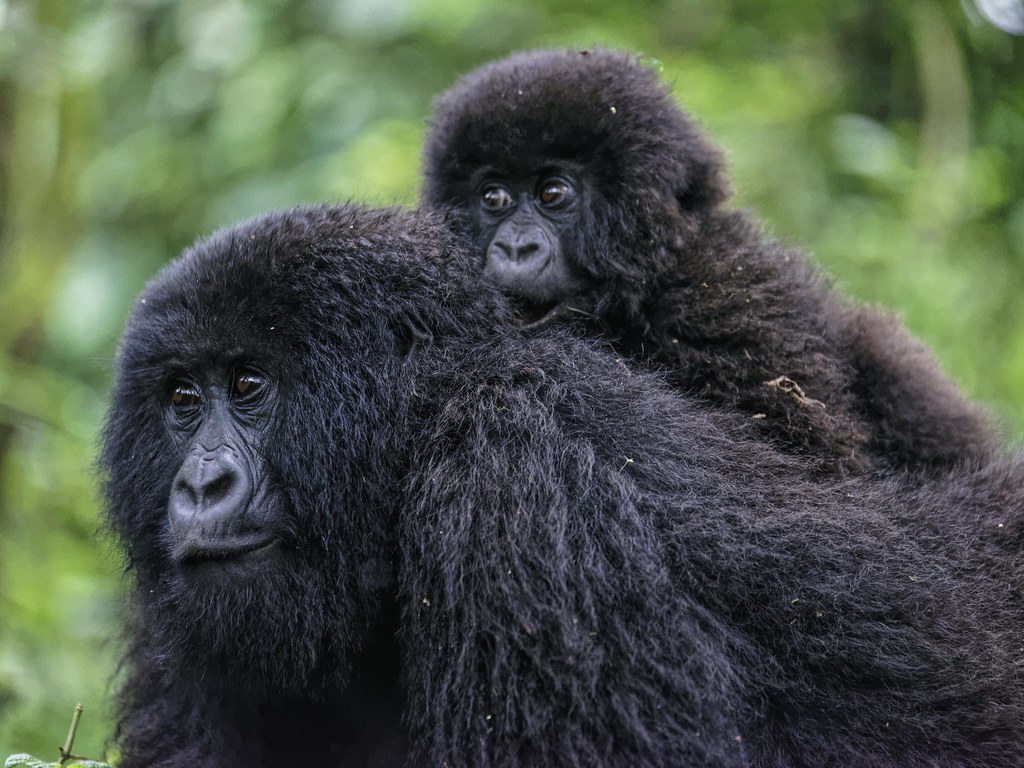
who remind us of our own roots and our shared place in the natural world. Each species is unique, from the gentle strength of gorillas to the intelligence of chimpanzees, the peaceful ways of bonobos, and the arboreal skills of orangutans. Yet they all face an uncertain future.
Protecting them means protecting the forests that sustain life on Earth. Whether through responsible tourism, supporting conservation organizations, or making sustainable lifestyle choices, we all have a role to play in ensuring that these magnificent creatures continue to thrive for generations to come.