
Rwanda Gorilla Trekking
The Complete Guide to Meeting Mountain Gorillas in Volcanoes National Park: Permits, Costs, Best Time to Visit, Lodges, Itineraries and Expert Tips
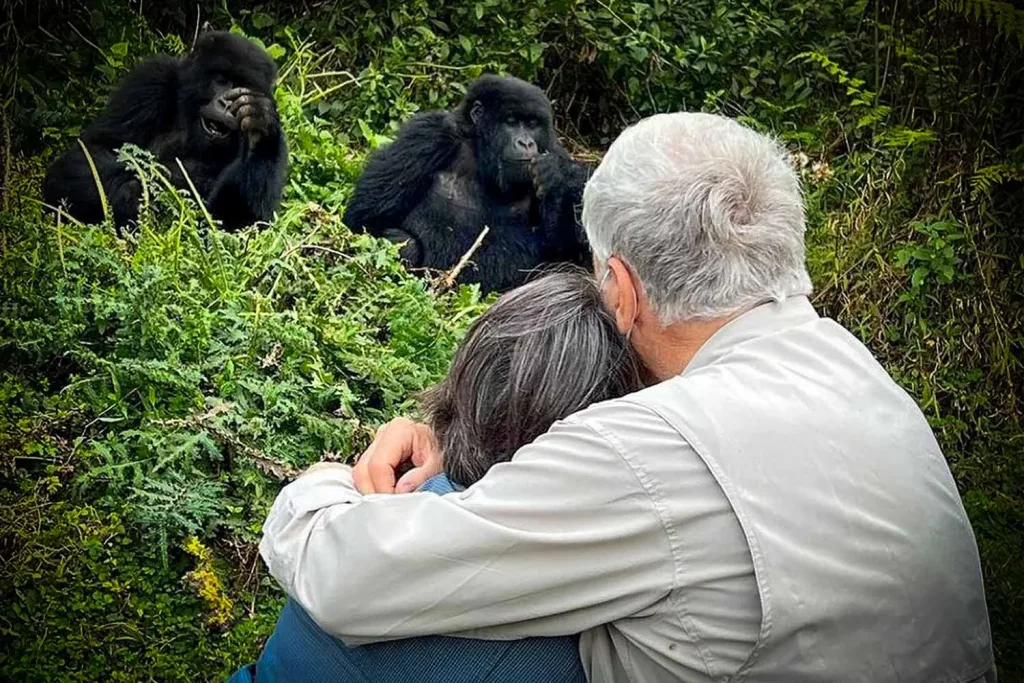
There are few wildlife moments on Earth that compare to the instant a silverback mountain gorilla lifts his head from a tangle of bamboo and looks straight at you. In Rwanda, that moment happens on the misty slopes of the Virunga volcanoes, a short drive from a modern capital city, inside one of Africa’s best-managed conservation areas. Rwanda gorilla trekking is a once-in-a-lifetime experience, and with careful planning it is also one of the smoothest primate adventures on the continent.
This guide covers everything you need to plan your trek: how much a Rwanda gorilla permit costs in 2026, how to book it, which gorilla families you might visit, the best months to go, what to pack, where to stay at every budget, and how to get from Kigali to Volcanoes National Park by chauffeur or self-drive. Whether you are planning a quick two-day trip or a longer Rwanda safari, you will find practical, up-to-date answers here.
- Where: Volcanoes National Park (Parc National des Volcans), Musanze District, northern Rwanda
- Starting point: Kinigi Park Headquarters, about 2.5 hours’ drive from Kigali
- Permit price (foreign non-residents): USD 1,500 per person per trek
- Time with the gorillas: Strictly 1 hour once your group reaches the family
- Group size: Maximum 8 visitors per gorilla family per day
- Minimum age: 15 years
- Trek duration: Roughly 1 to 6+ hours round trip, depending on the family’s location
- Best time to go: June to September and December to February (dry seasons)
Why Go Gorilla Trekking in Rwanda?
Mountain gorillas survive in only two places on Earth: the Virunga Massif, shared by Rwanda, Uganda and the Democratic Republic of Congo, and Bwindi Impenetrable National Park in Uganda. Of the three countries, Rwanda has built a reputation as the most accessible and polished gorilla trekking destination. Here is why so many travellers choose it.
- Short travel time. Volcanoes National Park is only about 105 km from Kigali International Airport. You can land in the morning and be at your lodge by the afternoon, or even trek on a long day trip from the capital.
- Excellent roads and safety. Rwanda’s tarmac road network, clean towns and stable environment make overland travel easy, whether you hire a driver guide or self-drive.
- Open, scenic terrain. The volcanic slopes are often less dense than Uganda’s Bwindi forest, which can make for clearer views and photographs, set against a dramatic backdrop of bamboo, giant lobelias and cloud-wrapped peaks.
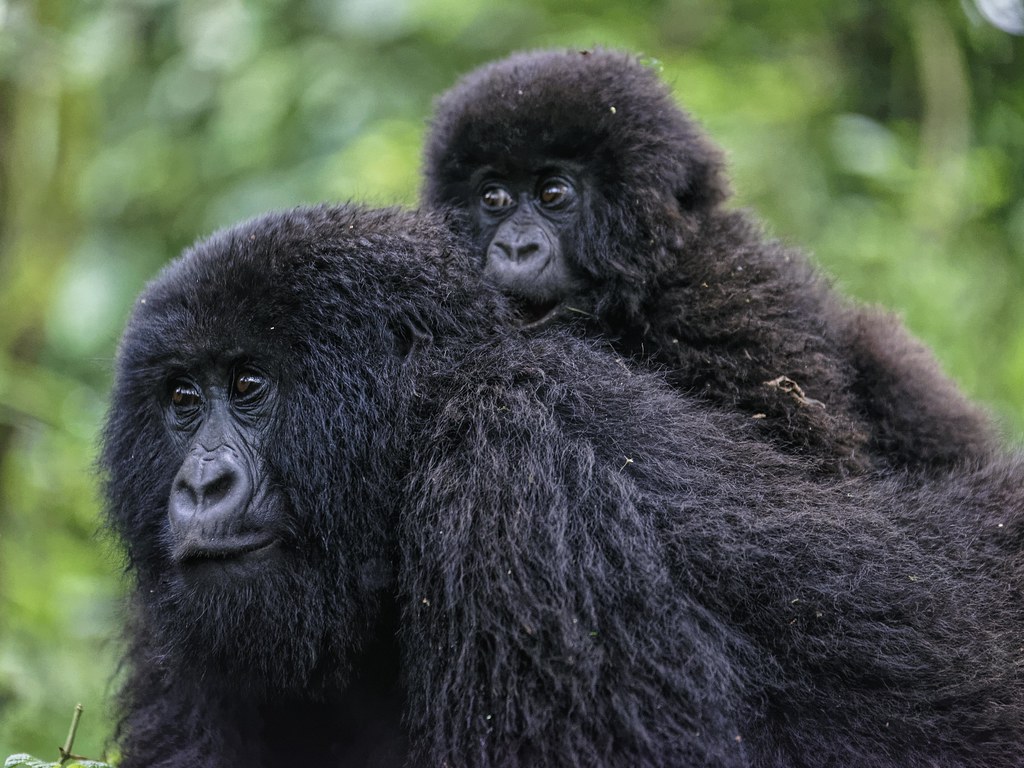
- Conservation success. Rwanda’s high-value, low-volume model has helped the mountain gorilla population recover. The species was reclassified from Critically Endangered to Endangered in 2018, and the total population now stands at just over 1,000 individuals.
- World-class lodges. From simple guesthouses in Musanze to some of Africa’s most celebrated luxury eco-lodges, the accommodation around the park is outstanding.
- Dian Fossey’s legacy. This is where the American primatologist Dian Fossey founded the Karisoke Research Center in 1967, the work made famous by “Gorillas in the Mist.” You can hike to her grave and visit the modern Ellen DeGeneres Campus of the Dian Fossey Gorilla Fund near Kinigi.

About Volcanoes National Park
Volcanoes National Park covers roughly 160 square kilometres of montane forest on the Rwandan side of the Virunga Mountains. It protects five of the eight Virunga volcanoes: Karisimbi (4,507 m, the highest), Bisoke, Muhabura, Gahinga and Sabyinyo. Established in 1925 as part of Africa’s first national park, it is now the beating heart of Rwanda’s tourism industry.
Vegetation changes dramatically with altitude, moving from farmland at the park boundary to bamboo forest, then Hagenia-Hypericum woodland, and finally open sub-alpine meadows with giant senecios on the higher slopes. Besides mountain gorillas, the park is home to the rare golden monkey, forest elephants and buffalo (rarely seen), spotted hyenas, bushbuck, black-fronted duiker and more than 200 bird species, including many Albertine Rift endemics.
The Habituated Gorilla Families
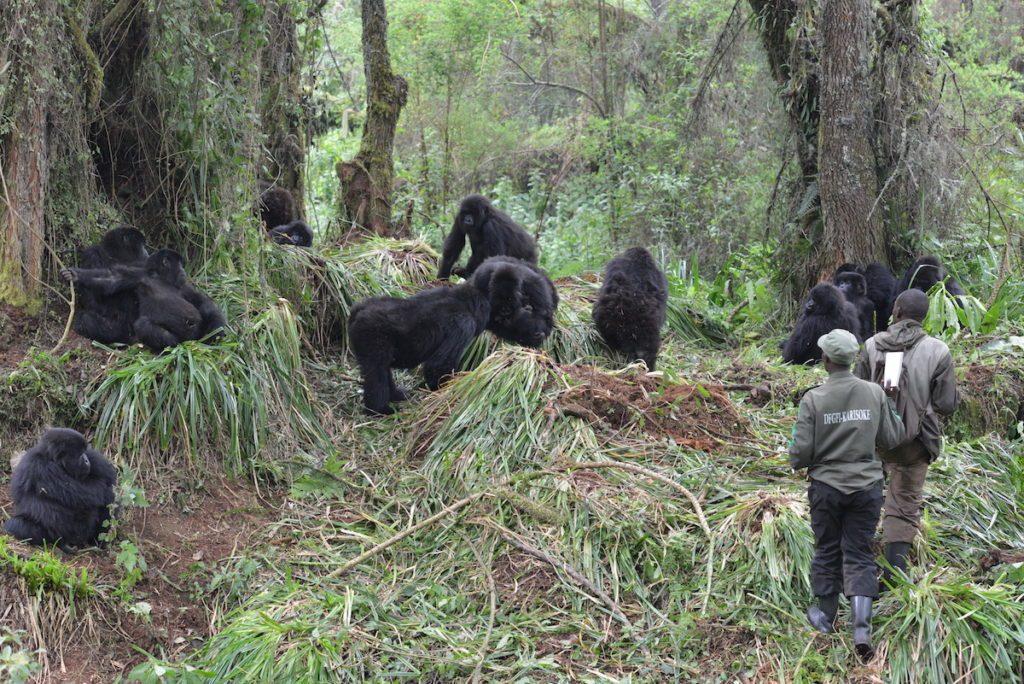
Around a dozen gorilla families in Volcanoes National Park are habituated for tourism, meaning they have been gradually accustomed to human presence over two or more years. Each family can be visited by just one group of up to eight people per day. The table below shows several of the best-known families. Remember that gorillas move constantly, so the difficulty of any trek can change from one day to the next.
Gorilla Family | Typical Location | Usual Trek Difficulty | Notes |
Sabyinyo | Slopes of Mt Sabyinyo / Gahinga | Easy to moderate | Often the closest family; popular with older or less fit trekkers |
Agashya (Group 13) | Between Sabyinyo and Bisoke | Moderate | Named after its silverback; well-known, relatively accessible group |
Kwitonda | Lower slopes of Mt Muhabura | Moderate | Originally migrated from the DRC side of the Virungas |
Hirwa | Between Sabyinyo and Gahinga | Moderate | Its name means “lucky one”; known for having had twins |
Umubano | Slopes of Mt Bisoke area | Moderate | Formed after a silverback broke away from the Amahoro family |
Amahoro | Slopes of Mt Bisoke | Moderate to challenging | “Amahoro” means peace; a calm, gentle family |
Bwenge | Slopes of Mt Karisimbi | Moderate to challenging | Featured in the filming of “Gorillas in the Mist” |
Karisimbi | High on Mt Karisimbi | Challenging | Can range high up the volcano; for very fit trekkers |
Susa | Slopes of Mt Karisimbi | Challenging | Historic family studied by Dian Fossey; often the hardest trek |

Can I choose my gorilla family? Families are allocated on the morning of your trek at Kinigi headquarters, not when you book. Park staff group visitors by fitness and age, so tell your driver guide or the rangers if you want a shorter or longer trek. Requests are usually honoured where possible, but nothing is guaranteed. |
3. Rwanda Gorilla Permit Cost 2026
The gorilla permit is the single biggest expense of your trip. It is issued by the Rwanda Development Board (RDB) and covers park entry, the services of the rangers and trackers, and one hour with a habituated gorilla family. Permits are valid for one specific date and are non-transferable.
Visitor Category | Permit Price (per person) | Notes |
Foreign non-residents | USD 1,500 | Standard year-round rate |
Rwandan & EAC citizens | USD 200 | National ID, passport or birth certificate required |
African citizens & African residents (2026 promotion) | USD 500 | Promotional rate valid to 31 December 2026, but not in June–October |
Multi-park discount (foreign visitors) | Approx. USD 1,050 | Offered to visitors who combine gorilla trekking with extra nights in Nyungwe and/or Akagera; confirm current eligibility with RDB or your operator |
2026 Promotional Rates: What You Need to Know In January 2026, RDB announced promotional gorilla permit rates for domestic, regional and African travellers. African citizens and residents qualify for the USD 500 rate by presenting a valid passport together with a resident ID, diplomatic card, or a visa showing at least four consecutive months of residence. The promotion runs until 31 December 2026 and is suspended during the June–October peak season. Always confirm the latest rates before booking, as RDB adjusts pricing from time to time. |
What the Permit Includes and Excludes
Included in the Permit | Not Included |
Volcanoes National Park entrance for the day | Transport to Kinigi and the trailhead |
Briefing at Kinigi Park Headquarters | Accommodation and meals |
Expert ranger guide and armed escort | Porter fees (around USD 10–20 per porter, plus tip) |
Trackers who locate the gorillas ahead of you | Tips for rangers and trackers |
One hour with a habituated gorilla family | Walking stick rental (often free at HQ) and gear |
A certificate of participation after the trek | Visas, travel insurance and flights |
Why Is the Rwanda Gorilla Permit So Expensive?
Rwanda deliberately follows a high-value, low-impact tourism model. Higher permit prices keep visitor numbers low, reduce stress and disease risk for the gorillas, and generate significant funding for conservation. A share of park revenue is channelled to communities living around the park, funding schools, health centres, water projects and small businesses. This gives local people a direct stake in protecting the gorillas, which has been central to the species’ recovery.
4. How to Book a Rwanda Gorilla Permit
Only about 100 permits are available each day across all habituated families, so demand often outstrips supply, especially from June to September and over Christmas. Book as early as you can: four to six months in advance for peak season, and at least two to three months for the rest of the year.
Option 1: Book Through a Tour Operator (Recommended)
Most travellers book through a licensed Rwandan or East African tour operator. The operator checks availability, secures the permit on your behalf, and bundles it with transport, accommodation and guiding. This is the simplest option and gives you a single point of contact if plans change.
Option 2: Book Directly with RDB
Independent travellers can book directly through RDB’s official online tourism booking channels (visitrwanda.com links to the official system). The general process is:
- Check availability for your preferred date on the official RDB booking platform.
- Enter the full passport details of every trekker exactly as they appear in the passport.
- Pay the full permit fee online by card.
- Receive your electronic permit confirmation and print or save it.
- Bring your passport and permit to Kinigi Park Headquarters on the morning of the trek.
Booking Tips Lock in the permit first, then build flights, lodges and transport around the confirmed date. Have a back-up date in mind in case your first choice is sold out. Read the cancellation policy carefully. Permits are generally non-refundable, with only limited rescheduling options. Comprehensive travel insurance is strongly recommended. Beware of unofficial sellers. Only buy from RDB or a reputable, licensed operator. |
5. Best Time to Go Gorilla Trekking in Rwanda
Gorilla trekking runs all year, and the gorillas do not migrate, so you can see them in any month. What changes is the weather, trail conditions and crowds. Rwanda has two dry seasons and two wet seasons.
Period | Season | Trekking Conditions | Our Verdict |
June – September | Long dry season | Firmer, less muddy trails; clearer skies; cool mornings | Best overall; book permits early |
December – February | Short dry season | Generally good conditions with occasional showers | Excellent; busy over Christmas |
March – May | Long rainy season | Heavy rain, slippery and muddy slopes; lush scenery | Fewer visitors and lodge discounts; for adventurous trekkers |
October – November | Short rainy season | Afternoon showers common; trails can be muddy | Good value shoulder season |
Even in the dry season, rain is always possible at this altitude, and early mornings can be cold (around 10–15°C). Pack a waterproof jacket whatever month you travel.
Don’t Miss: Kwita Izina Kwita Izina is Rwanda’s annual gorilla naming ceremony, held near Kinigi, traditionally around September. Inspired by the Rwandan tradition of naming newborn babies, it celebrates every gorilla infant born in the previous year and draws conservationists, celebrities and dignitaries. Check the official date each year if you would like to time your visit around it. |
6. What to Expect on Trekking Day
Gorilla trekking is a full morning adventure, sometimes stretching into the afternoon. Here is how a typical day unfolds.
Time | What Happens |
05:30 – 06:00 | Early breakfast at your lodge; collect your packed lunch |
06:30 – 07:00 | Arrive at Kinigi Park Headquarters; passport and permit check |
07:00 – 07:45 | Traditional Intore dance performance, coffee and tea; family allocation by rangers |
07:45 – 08:15 | Detailed briefing by your ranger guide on the family, rules and safety |
08:15 – 09:15 | Drive to the trailhead for your assigned family (up to an hour on bumpy roads) |
09:15 onwards | Hike through farmland and into the forest, guided by trackers in radio contact |
On contact | Leave bags with porters, approach the family and spend one magical hour with them |
Afternoon | Hike back, collect your certificate, and return to your lodge to relax |
Your Hour with the Gorillas
Once the trackers locate the family, your group sets down walking sticks and bags, keeps only cameras, and follows the ranger quietly into position. You may find the gorillas feeding, grooming, resting in a sunny clearing, or youngsters tumbling and play-fighting under the watchful eye of the silverback. The rangers communicate with the gorillas using soft grunting sounds that signal calm and respect. The hour passes astonishingly quickly. Many travellers find it emotionally overwhelming, so give yourself a few minutes simply to watch without the camera.
7. Gorilla Trekking Rules and Etiquette
These rules exist to protect both the gorillas and visitors. Mountain gorillas share about 98% of our DNA, which makes them vulnerable to human illnesses such as colds, flu and respiratory infections.
- Keep your distance. Stay at least 7 metres (about 23 feet) away. If a gorilla approaches you, stay still or step back slowly as directed by your guide.
- Do not trek if you are unwell. If you have a cold, flu, fever or any contagious illness, inform the park staff. You may be asked not to trek, and this rule is taken very seriously.
- Wear a face mask if the rangers request it when near the gorillas.
- Keep your voice low and move calmly. Never make sudden movements.
- No flash photography. Turn off the flash and focus-assist lights on your camera and phone.
- Never eat, drink or smoke near the gorillas, and leave no litter in the park.
- Do not touch the gorillas, even if a curious youngster comes close.
- If a silverback charges, do not run. Crouch down, look away submissively and follow your ranger’s instructions. Charges are usually bluffs.
- Respect the one-hour limit, which is strictly enforced to minimise stress on the family.
8. Fitness, Altitude and Hiring a Porter
You do not need to be an athlete, but a reasonable level of fitness makes the experience far more enjoyable. Treks start at roughly 2,500 metres above sea level and can climb higher, on steep, muddy and uneven terrain through nettles and bamboo. The thinner air leaves many visitors breathless.
- Prepare in advance with regular walking, hill hikes or stair climbing in the weeks before your trip.
- Go slowly. Rangers set a steady pace and stop for breaks. Tell them if you need to rest.
- Stay hydrated and carry snacks for energy.
- Communicate your needs at the briefing so you are allocated a suitable family.
Hire a Porter: It Matters More Than You Think Porters from the surrounding communities wait at each trailhead. For around USD 10–20 (plus a tip), a porter will carry your daypack, steady you on steep sections and help you up muddy slopes. Many porters are former poachers or their family members, so hiring one directly supports conservation and gives local people a sustainable income. Even fit trekkers find a porter invaluable. |
Accessibility: Travellers with limited mobility can still trek. Ask your operator about sedan-chair style stretchers carried by teams of porters, which can be arranged for an extra fee.
9. What to Pack for Gorilla Trekking in Rwanda
Category | Essential Items |
Footwear | Broken-in, waterproof hiking boots with good ankle support and grip; thick hiking socks plus a spare pair |
Clothing | Long-sleeved shirt and long trousers in neutral colours (green, khaki, brown); warm fleece or light sweater; tuck trousers into socks to keep out ants |
Rain protection | Lightweight waterproof jacket and rain trousers; waterproof cover or dry bag for your daypack |
Hands & head | Sturdy gardening gloves to protect against stinging nettles; hat or cap |
Daypack contents | At least 2 litres of water, packed lunch, energy snacks, insect repellent, sunscreen, basic first-aid kit, face mask |
Photography | Camera with a 24–105 mm or 70–200 mm zoom, extra batteries and memory cards (no flash allowed); fast lens helps in dim forest light |
Documents | Passport and printed or digital gorilla permit; travel insurance details |
Note on plastic bags: Rwanda has banned single-use plastic bags since 2008. Avoid packing them in your luggage, as they may be confiscated on arrival.
10. How to Get to Volcanoes National Park
Most visitors fly into Kigali International Airport (KGL), which is served by RwandAir, Qatar Airways, KLM, Turkish Airlines, Kenya Airways, Ethiopian Airlines and others. From Kigali, Kinigi is about 105 km to the north-west.
Transport Option | Travel Time | Best For |
Private 4×4 with driver guide | About 2.5 hours | Most travellers; stress-free and flexible, with local knowledge |
Self-drive car rental | About 2.5–3 hours | Independent travellers comfortable driving on the right |
Shared shuttle or public bus to Musanze | 2.5–3 hours plus local transfer | Budget travellers (you still need a vehicle to reach the trailhead) |
Helicopter charter | About 30 minutes | Luxury travellers short on time |
Self-Drive or Chauffeur-Driven?
Rwanda is one of the easiest countries in East Africa to self-drive. The main Kigali–Musanze road is fully tarmacked, traffic drives on the right, and towns have reliable fuel stations. However, the final roads from Kinigi to some trailheads are rough, steep and muddy, so a high-clearance 4×4 such as a Toyota RAV4, Land Cruiser Prado or Nissan X-Trail is strongly recommended, particularly in the rainy season.
A chauffeur-driven option adds real value: your driver guide handles navigation, liaises with park staff at Kinigi, knows each trailhead, and can advise on gorilla families and lodges. For first-time visitors, this is usually the most relaxing way to travel.
Driving Tips for Rwanda Carry your driving licence (and an International Driving Permit if your licence is not in English or French). Observe speed limits strictly, as speed cameras are common. Rwanda also holds Umuganda community work on the last Saturday morning of each month, when most traffic stops roughly between 08:00 and 11:00, so plan transfers around it. Tourists heading to a confirmed trek are generally allowed through, but carry your permit. |
Crossing from Uganda
Many travellers combine Rwanda with Uganda. The Cyanika border links Kisoro in south-western Uganda with Musanze, making it easy to pair Volcanoes National Park with Bwindi or Mgahinga. The Gatuna/Katuna border is the main crossing between Kabale and Kigali. If crossing in a rental vehicle, make sure your operator provides the cross-border documents and COMESA insurance.
11. Where to Stay Near Volcanoes National Park
Stay in Kinigi for the shortest drive to park headquarters on trekking morning, or in Musanze town (about 30 minutes away) for better-value options and more restaurants. The following lodges are popular choices at each level.
Tier | Lodge Examples | What to Expect |
Ultra-luxury | Singita Kwitonda Lodge; Bisate Lodge (Wilderness); One&Only Gorilla’s Nest | Spectacular design, private villas with fireplaces, gourmet dining, reforestation projects; often USD 1,500–4,000+ per person per night |
Luxury | Sabyinyo Silverback Lodge; Virunga Lodge (Volcanoes Safaris) | Intimate, community-linked lodges with superb volcano views; full board |
Mid-range | Mountain Gorilla View Lodge; Da Vinci Gorilla Lodge; Five Volcanoes Boutique Hotel | Comfortable cottages or rooms close to Kinigi, good food and warm hospitality |
Budget | Kinigi Guest House; La Palme Hotel and other Musanze hotels | Clean, simple rooms; ideal if the permit takes most of your budget |
Lodge prices vary by season and change regularly, so request current quotes. Book accommodation as soon as your permit is confirmed, especially for high season.
12. Other Things to Do in and Around Volcanoes National Park
Stay an extra day or two to make the most of the region. These activities pair beautifully with your gorilla trek.
Activity | Description | Approx. Duration |
Golden monkey tracking | Track playful, endangered golden monkeys in the bamboo zone; easier than gorilla trekking and great for photography | 3–4 hours |
Dian Fossey tomb hike | Hike to the former Karisoke site where Dian Fossey and her favourite gorilla, Digit, are buried | 3–4 hours |
Mount Bisoke hike | Climb to the stunning crater lake on the summit of Bisoke (3,711 m) | 6–7 hours |
Mount Karisimbi climb | Two-day trek with an overnight camp to the highest point in the Virungas (4,507 m) | 2 days |
Gorilla Guardians Village | Cultural experience with traditional dance, crafts, a king’s house replica and local cooking | Half day |
Twin Lakes Burera & Ruhondo | Boat trips and viewpoints over two beautiful lakes near Musanze | Half day |
Musanze Caves | Explore a 2 km lava tube cave system formed by volcanic activity | 1–2 hours |
Dian Fossey Gorilla Fund Campus | Interactive exhibits on gorilla research and conservation in Kinigi | 1–2 hours |
Activity permits for golden monkeys and hikes are priced separately by RDB and are far cheaper than gorilla permits. Check current fees when booking.
13. Sample Rwanda Gorilla Trekking Itineraries
2-Day Rwanda Gorilla Trekking Safari
Day | Plan |
Day 1: Kigali to Musanze | Pick-up in Kigali, optional visit to the Kigali Genocide Memorial, then scenic drive north through the “land of a thousand hills” to your lodge near Volcanoes National Park. |
Day 2: Gorilla trek and return | Early breakfast, briefing at Kinigi, gorilla trek and one hour with the family. Return to the lodge for lunch, then drive back to Kigali for your flight or overnight stay. |
3-Day Gorilla and Golden Monkey Safari
Day | Plan |
Day 1: Kigali to Volcanoes NP | Kigali city tour, then transfer to Kinigi. Afternoon visit to the Dian Fossey Gorilla Fund campus or the Gorilla Guardians Village. |
Day 2: Gorilla trekking | Full morning trek to a habituated gorilla family. Relax at the lodge in the afternoon or visit the Twin Lakes. |
Day 3: Golden monkeys and return | Morning golden monkey tracking (or Dian Fossey tomb hike), then drive back to Kigali for departure. |
Extending Your Trip
For a fuller Rwanda safari, add Nyungwe Forest National Park for chimpanzee tracking and the canopy walkway, Lake Kivu for beach relaxation in Rubavu or Karongi, and Akagera National Park for Big Five game drives on the savannah. Combining parks may also qualify you for discounted gorilla permits.
14. How Much Does a Rwanda Gorilla Trekking Safari Cost?
Beyond the permit, your total cost depends on lodge choice, transport and trip length. The estimates below are indicative per-person figures for a 3-day trip, based on two people sharing.
Cost Item | Budget | Mid-Range | Luxury |
Gorilla permit | USD 1,500 | USD 1,500 | USD 1,500 |
Accommodation (2 nights) | USD 100–250 | USD 500–1,000 | USD 3,000–8,000+ |
Transport (4×4, driver, fuel) | USD 150–250 | USD 200–350 | USD 300–500+ (or helicopter) |
Meals and drinks | USD 50–100 | Usually full board | All-inclusive |
Extras (porter, tips, activities) | USD 50–150 | USD 100–250 | USD 150–300 |
Estimated total | USD 1,850–2,250 | USD 2,300–3,100 | USD 5,000–10,000+ |
Prices are guides only and change with seasons and exchange rates. Request a detailed, permit-inclusive quote so you can compare like with like.
15. Rwanda vs Uganda Gorilla Trekking
Uganda is Rwanda’s main alternative. Both offer unforgettable encounters, and the right choice depends on your budget, time and travel style.
Factor | Rwanda | Uganda |
Parks | Volcanoes National Park | Bwindi Impenetrable NP and Mgahinga Gorilla NP |
Permit (foreign non-resident) | USD 1,500 | USD 800 |
Habituation experience | Not offered | Available in Bwindi (4 hours with a family under habituation) |
Travel time from main airport | About 2.5 hours from Kigali | About 8–10 hours by road from Entebbe, or a short domestic flight |
Terrain | Volcanic slopes, bamboo; often more open | Dense, steep rainforest; often more challenging |
Number of habituated families | Around a dozen | Many more, spread across Bwindi’s four sectors and Mgahinga |
Best for | Short trips, comfort, ease of access | Value, longer safaris, combining with savannah parks |
Short on time with a flexible budget? Rwanda is hard to beat. Want to save on permits or combine gorillas with Queen Elizabeth or Murchison Falls? Uganda offers excellent value. Many travellers do both, crossing at Cyanika for a double gorilla adventure.
16. Visa, Health and Safety Information
Visas
Rwanda has one of Africa’s most open visa policies. Visitors of all nationalities can obtain a visa on arrival or apply online in advance through the official Irembo platform, and citizens of many countries (including African Union, Commonwealth and La Francophonie member states) receive visa-free or fee-waived entry. The East Africa Tourist Visa (USD 100) covers Rwanda, Uganda and Kenya for 90 days with multiple entries between them, ideal if you are combining countries. Check the latest rules for your nationality before travel.
Health
- Yellow fever: A vaccination certificate is required if you are arriving from, or have transited through, a country with yellow fever risk. It is also needed for many onward East African itineraries, so it is wise to carry one.
- Malaria: Risk is lower at Volcanoes National Park’s altitude but present elsewhere in Rwanda. Speak to a travel health professional about prophylaxis.
- Routine vaccinations should be up to date. Consult a travel clinic six to eight weeks before departure.
- Travel insurance that covers medical evacuation and trip cancellation is strongly recommended.
Safety
Rwanda is widely regarded as one of the safest countries in Africa for travellers. Volcanoes National Park treks are accompanied by experienced rangers and armed escorts, mainly as a precaution against buffalo and forest elephants. As with any destination, check your government’s latest travel advice before you go, including any guidance on areas near the borders.
17. Responsible Gorilla Tourism and Conservation
Every gorilla permit helps protect one of the world’s most remarkable conservation success stories. Permit revenue funds ranger patrols, veterinary care through the Gorilla Doctors programme, ongoing research and community development. Rwanda’s tourism revenue-sharing programme channels a portion of park income to communities around protected areas, building schools, clinics and water systems.
You can amplify your positive impact by hiring a porter, buying crafts from local cooperatives, visiting community projects such as the Gorilla Guardians Village, tipping fairly, and choosing lodges that invest in reforestation and local employment.
18. Frequently Asked Questions
How much is a gorilla permit in Rwanda in 2026?
Foreign non-residents pay USD 1,500 per person. Rwandan and EAC citizens pay USD 200, and African citizens and residents can access a USD 500 promotional rate until 31 December 2026, excluding June to October.
How long do you spend with the gorillas?
Exactly one hour from the moment your group reaches the gorilla family. The trek to find them can take anywhere from under an hour to several hours.
Is seeing the gorillas guaranteed?
Sightings are not officially guaranteed, but success rates are extremely high, often cited at over 95%, because trackers locate the families before trekkers set off.
What is the minimum age for gorilla trekking in Rwanda?
Trekkers must be at least 15 years old on the date of the trek. Younger children can enjoy golden monkey tracking or cultural activities instead.
How fit do I need to be?
Moderate fitness is enough for most treks. Hikes take place at high altitude on steep, muddy terrain. Porters and walking sticks make a big difference, and you can request an easier family.
Can I do gorilla trekking as a day trip from Kigali?
Yes. Leave Kigali around 04:00 to reach Kinigi by 07:00, trek, and return in the evening. It is a long day, so most travellers prefer at least one night near the park.
What happens if it rains?
Treks go ahead in rain. Waterproof clothing, good boots and gloves keep you comfortable, and the gorillas are still active.
Can I self-drive to Volcanoes National Park?
Yes. The road from Kigali to Musanze is paved and well maintained. A 4×4 is recommended for the rough final stretch to some trailheads, particularly in the rainy season.
Can I combine Rwanda and Uganda gorilla trekking?
Absolutely. The Cyanika border between Musanze and Kisoro makes it easy to trek in Volcanoes National Park and Bwindi or Mgahinga on the same trip, ideally with the East Africa Tourist Visa.
What should I do if I feel sick before my trek?
Inform park staff at Kinigi. Gorillas can catch human diseases, so rangers may advise you not to trek. Comprehensive travel insurance helps protect your investment.
Plan Your Rwanda Gorilla Trekking Adventure
Gorilla trekking in Rwanda is far more than a wildlife sighting. It is a profound encounter with our closest relatives in one of the most beautiful mountain landscapes in Africa, and your visit directly supports their survival. With permits limited and demand high, the key to a smooth trip is planning ahead: secure your permit early, choose the right season, book reliable transport, and pick a lodge that suits your style.
Volcanoes National Park can help you secure gorilla permits, arrange chauffeur-driven or self-drive 4×4 vehicles from Kigali, and build a tailor-made Rwanda or Uganda gorilla safari around your dates and budget. Contact our team today to start planning your trek. |