

Vaccinations needed when participating in gorilla trekking or golden monkey trekking at volcanoes national park Rwanda.
Vaccinations needed when participating in gorilla trekking or golden monkey trekking: Interestingly, Rwanda is one of the most popular vacation destinations in Africa, and visitors from all over the world are welcome to enjoy all of its tourism attractions. According to the 2018 census, Rwanda is home to 30% of the 1063 mountain gorillas that remain on Earth, making it the country most popular for mountain gorilla trekking. There is plenty for travelers on African safaris to discover in this landlocked nation. You may attest to Rwanda’s reputation as “The Land of a Thousand Hills” when on vacation. It is a stunning nation with a wide variety of plants and animals. In addition to its natural beauty, Rwanda is well-known for its terrible past—the genocide that occurred there in 1994.
While both golden monkey and gorilla trekking offer profound immersions into Rwanda’s lush bamboo woods, they offer rather distinct physical and emotional experiences. Travelers frequently use the golden monkeys as a preparation before the more rigorous gorilla encounter, or they begin their exciting safari with gorilla trekking and conclude it with golden monkey trekking.
Everyone is usually careful about which vaccinations to take and which are required when traveling to a new place since you don’t want to arrive unprepared and then be denied access to an activity you’ve always wanted to do. When engaging in typical trekking activities with gorillas and golden monkeys in Rwanda’s Volcanoes National Park.
Vaccination is not mandatory at Volcanoes national park but some of these will be necessary in case you are planning to combine Rwanda safari with any other East African destination because minus them some of the airports will not allow you to gain access to flight even if at Kigali International Airport there is no much restrictions. Due to covid-19 there were a lot of restrictions put into place like need to be vaccinated against covid-19 to gain access to Volcanoes National Park Rwanda but such restrictions have been lifted off.
Which group of people are required to have mandatory vaccinations before participating in Gorilla trekking or golden monkey trekking?
In order to protect themselves and the extremely vulnerable mountain gorillas and golden monkeys from human-borne diseases and to ensure that outbreaks like respiratory illnesses don’t jeopardize conservation efforts, researchers are the main group of people expected to have mandatory vaccinations, mainly Yellow Fever, due to potential transmission risks in Africa
And also particularly research, which are usually conducted are under stringent guidelines and may include lengthier, recurrent stays. This is due to the fact that mountain gorillas and humans share 98% of their DNA and golden monkey that are also primates, making it easy for people and the endangered mountain gorillas to contract these diseases. This is a component of stringent health measures, such as possible masks, to protect endangered primates from human diseases and sustain tourism, a major source of income
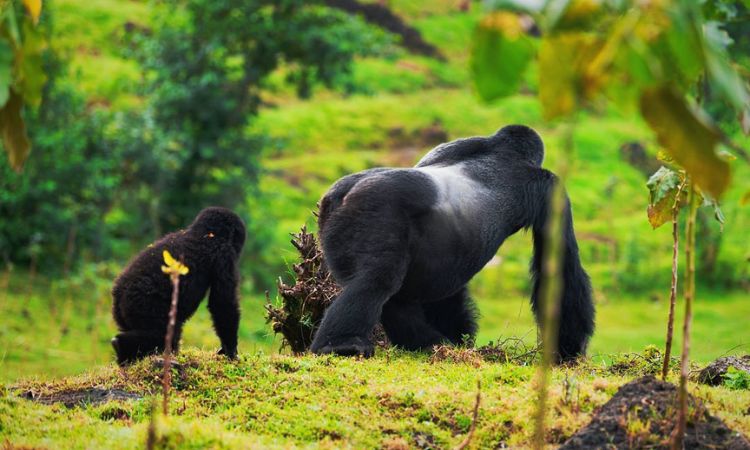
The Significance of Vaccines in Gorilla Trekking
Because mountain gorillas are immune systems are comparable to ours, so they are vulnerable to a variety of human diseases, including the flu, measles, and respiratory infections. An entire gorilla family is at risk from even a little cold. National park officials implement stringent health standards for visitors in order to avoid this.
Tourists must adhere to cleanliness regulations and provide documentation of certain immunizations prior to the journey. Both people and gorillas will continue to have a safe and sustainable experience thanks to these precautions.
Vaccinations Needed for Gorilla Trekking and Golden monkey trekking at Volcanoes National Park Rwanda.
As already mentioned these vaccinations are not a must in Rwanda but they are recommended. Researchers are the only ones expected to have mandatory vaccinations. The following are the necessary vaccinations needed during gorilla trekking and golden monkey trekking at Volcanoes National Park. Due to travel circumstances, inaccessible routes, and possible exposure, these are strongly advised even though they are not explicitly mandated by Rwanda’s border health regulations:
-
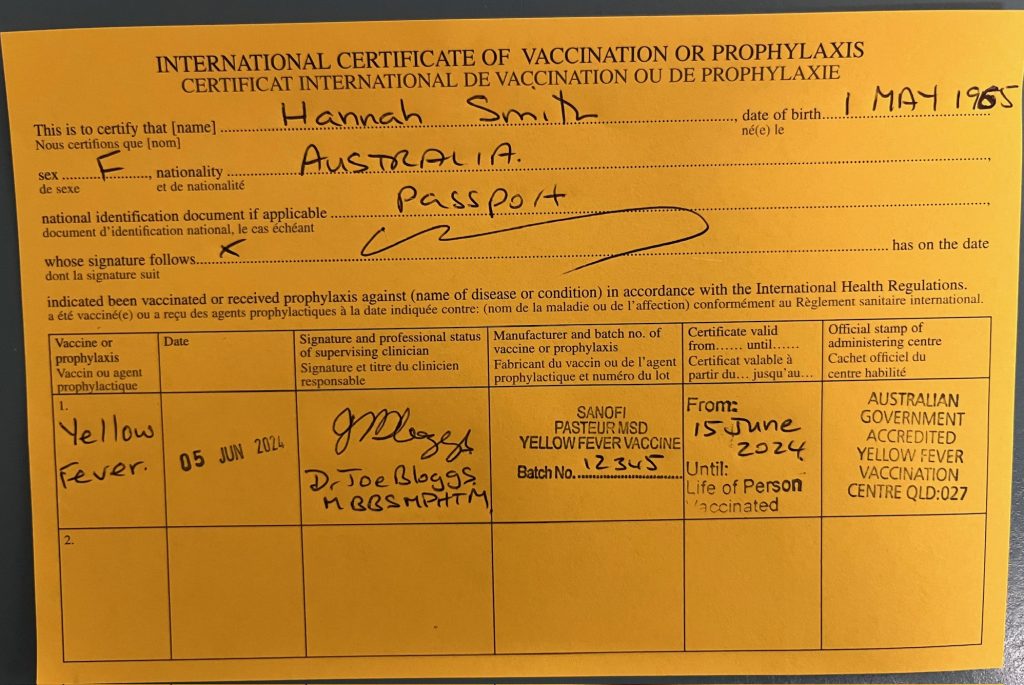
Yellow fever.
Yellow fever vaccine is not necessary for traveling to Rwanda, however it is required when traveling to any other East African nation especially if you have been to or are from a region where yellow fever is endemic. Upon arrival, you must show a valid International Certificate of Vaccination. To ensure maximum effectiveness, obtain this injection at least ten days before to travel. Although Rwandan entrance regulations may not necessarily need yellow fever vaccine if you are traveling directly from a non-yellow fever risk area, many tour companies still strongly advise it, particularly if you are on a multi-country safari.
-
Hepatitis A and B
When you take a hepatitis A vaccination, this prevents infection from tainted food or water particularly helpful if you plan to dine at nearby eateries or marketplaces and Hepatitis B prevents blood-borne infections such as those from hospital setting, sweat, wounds, and insect bites which is crucial while visiting isolated or rural locations like at Volcanoes National Park.
-
Typhoid
The typhoid vaccination protects against germs that can cause serious sickness and are found in food and drink. It is highly suggested for those exploring local markets in Rwanda or going to isolated places like Volcanoes National Park with rustic dining stops.
-
Tetanus / Diphtheria / Pertussis (Tdap)
Tetanus vaccinations are crucial, particularly for those who will be in rural or forested areas. Trekking entails walking through thick vegetation, so if your vaccination is outdated, a minor cut might expose you to illness.
-
Regular Immunizations (MMR, Polio, Flu)
Make sure you’re up to date on seasonal flu vaccines, polio, measles, mumps, and rubella (MMR). In addition to preventing diseases that can interfere with your journey, these are also general health precautions. The MMR vaccination guards against illnesses that might infect gorillas and spread quickly among people. It is important for travelers to make sure their MMR vaccine is up to date, especially if it was administered years ago.
-
Rabies (Optional but Worth Considering)
Especially if you will spend extended time outdoors where you might encounter wildlife or stray animals it is not mandatory, but recommended for rural travel.
-
Malaria – Medication (Not a Vaccine for elders)
Although the danger of malaria is reduced at the high altitudes of Volcanoes National Park, there is still a risk in Kigali and lower-lying places forests in Volcanoes national park and during rainy seasons. However, there is currently no widely used malaria vaccine for elderly tourists. DEET insect repellent and antimalarial medications (such as doxycycline, atovaquone/proguanil, or others your doctor recommends) are highly advised.
Polio: Particularly crucial when traveling to areas where the disease is actively spreading or where sanitation is inadequate.
Flu: Prevents mountain gorillas from contracting respiratory illnesses when trekking
Practical Health Tips Before You Go
-
You should visit a travel clinic 6–8 weeks before your safari dates.
This lets you schedule multiple vaccine doses (some require boosters) over several weeks and gives your body time to build immunity so you will need to visit the health care 6 to 8 weeks before your safari dates so that you be safe.
-
Check your personal medical history
Some vaccines may not be suitable for everyone (e.g., pregnant people, immune compromised travelers) so please you need to check your personal medical history before you get vaccinated to prevent having complications.
- Bring malaria prophylactics and insect repellent
Mosquitoes do exist in Rwanda’s Volcanoes National Park, particularly during the rainy season and at lower elevations. Therefore, protective clothing, insect repellent (DEET is advised), and malaria prevention are crucial, even though high altitude lowers the risk; lodges offer mosquito nets, but alertness is crucial.
Volcanoes National Park’s health regulations and safety measures.
- Strict health measures are taken by park officials at Rwanda’s Volcanoes National Park. Trekkers who exhibit fever, coughing, or flu symptoms are prohibited from trekking mountain gorillas and golden monkeys.
- When interacting with gorillas, visitors are required to keep a 7-meter distance, wear masks, and avoid making prolonged eye contact. These regulations maintain the integrity of conservation initiatives while shielding gorillas from diseases spread by humans.
- Additionally, visitors are prohibited from touching the mountain gorillas and golden monkeys as well as from eating, drinking, or smoking when in close proximity to them.
- It’s important to have your international health certificate or immunization card with you since border and park officials could ask for it.