
Visit Rwanda Gorillas
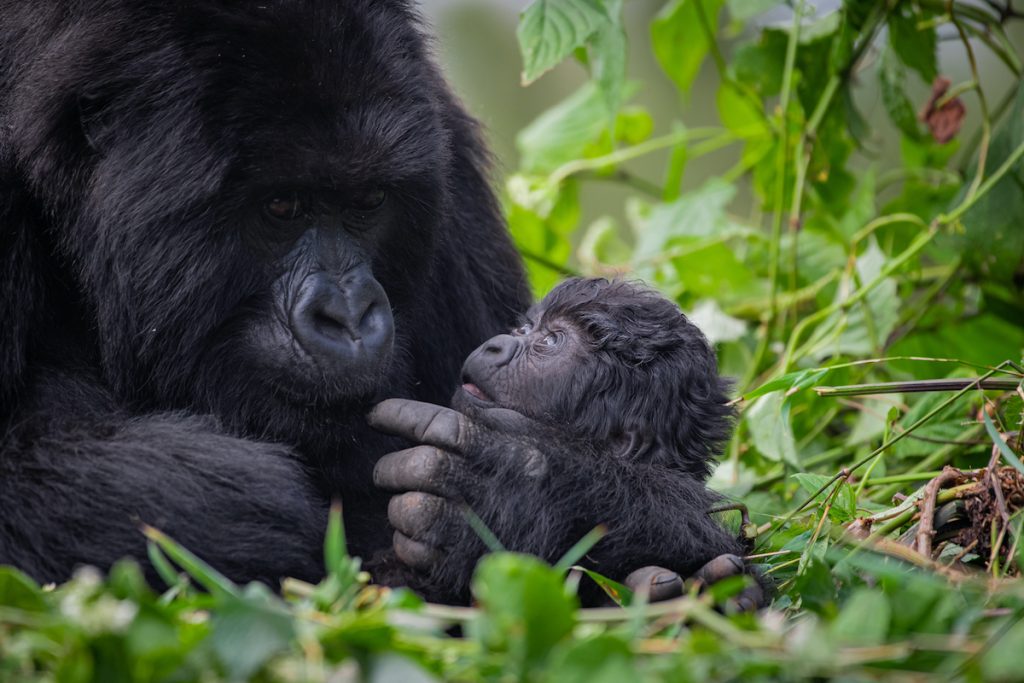
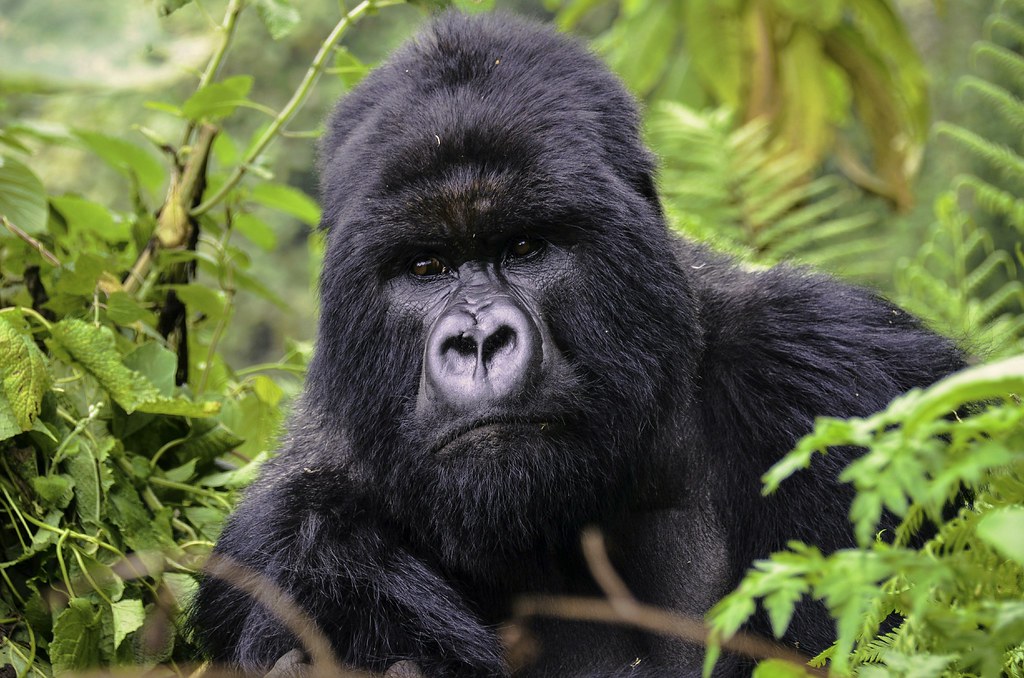
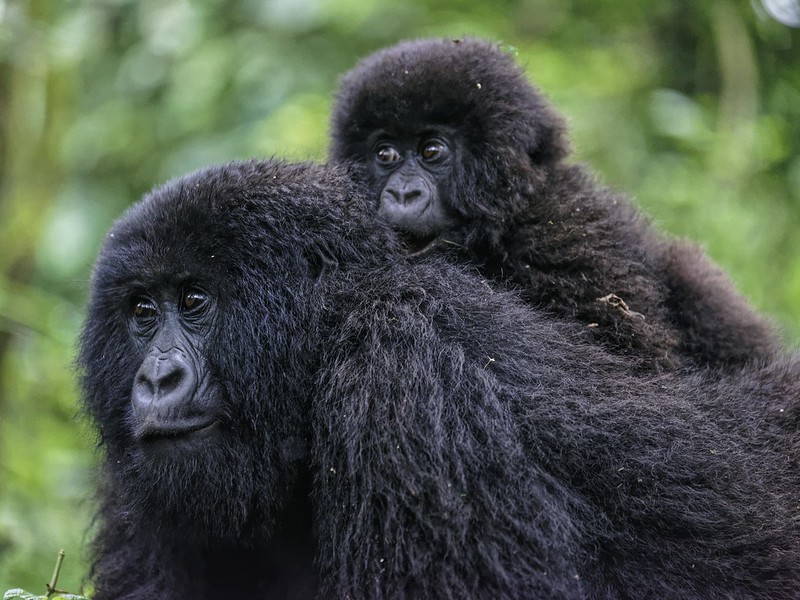
Visit Rwanda Gorillas: Encountering Mountain Gorillas in Rwanda constitutes one of the premier wildlife experiences worldwide. This exceptional opportunity to visit Rwanda gorillas in their native environment (volcanoes national Park) is indelible, with some asserting it is transformative. Interactions with Rwanda gorillas during their daily activities are meticulously organized, with skilled trackers and guides escorting small groups of tourists up forested inclines to experience a valuable and breathtaking hour in the presence of these beautiful beings.
Currently, there are more than 1,000 mountain gorillas in the wild, with over 600 located in the Virunga Volcanic range. Due to the collaborative efforts of government entities, communities, and NGOs, the mountain gorillas represent the sole group of great apes globally that is experiencing growth. visiting gorillas in Rwanda is secure and attainable. In and around Volcanoes National Park, there exist 23 groups of gorillas, 12 of which are fully habituated for visitation, while the remaining groups are habituated only for scientific research. Each group comprises a minimum of one silverback, accompanied by many females and juveniles
Visiting Rwanda gorillas begins with a briefing at the park headquarters, which will familiarize you with the group you will be observing and instruct you on appropriate conduct around the gorillas. You will proceed to the park perimeter to commence tracking. You will ascend to your designated group, and the duration and topography of the hike will be contingent upon the location of the gorilla group you are visiting. It is strongly advised to wear hiking boots or durable walking shoes, waterproof attire, long sleeves, and gloves due to the dense flora and stinging nettles.
Visiting mountain gorillas in Rwanda real-time daily gorilla tracking experiences from fellow visitors to Volcanoes National Park, continue to follow our Gorilla accounts on Instagram for the most recent photos and videos from each group.




Best Recommended Packages to visit and Trek gorillas in Rwanda
1 Day Rwanda Gorilla Trek
2 Day Rwanda Gorilla Trek
2 Days Rwanda Gorilla Trek And Bisoke Hiking
3 Days Rwanda Gorillas and Golden Monkeys
5 Days in Rwanda: Trekking Gorillas Twice And Golden Monkeys
3 Days Rwanda Gorilla trekking and Dian Fossey Tomb Hike
Gorilla Families to Visit in Rwanda's Volcanoes National Park
Susa Gorilla family.
The Susa group is a member of the Mountain Gorilla family in Volcanoes National Park. This group presently comprises 17 members and 2 Silver-backs, having previously totaled 42 members prior to its division. The most intriguing aspect of Susa is the presence of the twins within this group. It is also the initial group that Dian Fossey studied during her tenure in Rwanda. The group is ostensibly the most challenging to monitor, however it is ultimately the most favored by Gorilla trekkers. Susa A resides in the lower base of Mount Karisimbi.
Susa Gorilla family.
This family presently comprises 16 members and 2 silverbacks. The Sabyinyo Gorilla family was established immediately after the demise of a prominent silverback. Following his demise, other females collaborated with others from different groups, resulting in a total of four females and two silverbacks, thus adopting the name Sabyinyo Gorilla Group. Currently, one of the Silverbacks leading this group is the largest in Volcanoes National Park. This group typically traverses the slopes of Mountain Sabinyo, facilitating reasonably straightforward tracking.
Amahoro Gorilla Family
Amahoro signifies peace in the Kinyarwanda language; hence, this organization is recognized for its peaceful practices. The tranquil nature of the family has historically resulted in the loss of members to more aggressive Silver-backs seeking to enlarge their own families. This family is led by a silverback named “Ubumwe,” which signifies oneness. The Amahoro Gorilla group presently inhabits the slopes of Mountain Bisoke and has approximately 18 members, including 2 silverbacks. This group is difficult to monitor due to the challenging topography of the mountain slopes. If you possess a tranquil disposition and cherish serenity, you may need to secure permissions for trekking this Gorilla group.
Kwitonda Gorilla Family
A Silverback traversed from the Democratic Republic of Congo to Rwanda in 2003. It is possible that it experienced pressure from other local gorilla families, prompting it to relocate and establish a separate group in an entirely other neighborhood.
The name Kwitonda was derived from the predominant silverback in this group. Akarevuro, who was youthful during Kwitonda’s reign, has assumed leadership upon Kwitonda’s death. The two additional Silverbacks in the group, Kigoma and Magumu, also acquiesced to the reality that Akarevuro had assumed leadership of the group. In September 2012. The Gorilla group currently comprises 29 members, with Kwitonda serving as the dominant silverback. The term Kwitonda signifies the lowly one. This gorilla group is located in the Virunga region of the park and is also challenging to hike. This family is frequently located on the slopes of Mountain Muhabura.
Agashya Gorilla Family
Initially designated as Group 13 due to its 13 family members, the group has since expanded to roughly 20 members for various reasons. The Agashya family was previously designated as Group 13 but has lately undergone a nomenclature change. The group’s name derives from the original count of the 13 men who founded it. The family was initially governed by a dominating silverback named Nyakarima, who was subsequently usurped by another dominant leader, Agashya, who continues to dominate to this day. The name Agashya signifies News, and intriguingly, the family was named after him. It evidently has many more members than it did before.The group comprises approximately 20 members, including a single Silverback. They also traverse the slopes of Mountain Sabyinyo, akin to the Sabyinyo family.
Umbano Gorilla family.
This gorilla group comprised 11 individuals. This group unexpectedly separated from the Amahoro group when the dominating silverback was contested by another silverback named Charles, who is now the leader of Umubano.The Umubano gorilla group, consisting of 13 members including 2 Silver-backs, was established by members of the Amahoro family following the departure of one of its Silver-backs, named Charles, who founded his own group. Despite the tranquility inside the Amahoro group, Charles and Ubumwe engaged in incessant conflicts until Charles could no longer endure, resulting in the formation of the Umubano Group. This group evidently inhabits the same territory as the Amahoro Group.
Hirwa Gorilla Family
The Hirwa Gorilla family comprises 20 individuals, including one Silverback. Initially constituted by members of the Sabyinyo family and group 13, the assembly subsequently expanded to include additional members, raising the total to 20. It traverses the region between Mount Gahinga and Sabyinyo. This group is among the most fortunate in the national park, being one of the few that successfully produced twins. Their twins were born in 2011. The term Hirwa signifies ‘Lucky One’. Do you require luck, or are you inherently fortunate? You may need to embark on a trek to observe this gorilla family.
Karisimbi Gorilla family
This group separated from the Susa Gorilla Group in 2009. Their acrimonious division reduced the Susa group, the largest mountain gorilla group at the time with roughly 42 individuals, to around 26 members, excluding their silverbacks. Karisimbi once comprised 15 members; however, some individuals resigned and affiliated with other groups. Currently, this group comprises 11 members, including 1 adult female, 4 silverbacks, 1 blackback, and 2 newborns. The Karisimbi Gorilla Group is among the most challenging to trek. The group sought refuge near a crater on Mount Karisimbi. Occasionally, it may require up to a day to detect them, particularly when they ascend to far higher altitudes. The Karisimbi Gorilla group, led by a Silverback named Nyagakangaga, resides on the slopes of Mount Karisimbi, the highest summit of the Virunga Volcanoes.
Titus Gorilla family
The Titus Family derives its name from the Silverback. Titus, a primate born while Dian Fossey was conducting her studies at the Karisoke studies Center. Titus’s family was slain by poachers, becoming him the sole survivor. He had numerous hardships during his upbringing but successfully surmounted these challenges, ultimately becoming one of the most accomplished silverbacks to inhabit Volcanoes National Park in Rwanda.Although it is a small family, this group proves to be one of the most intriguing to monitor. It resides on the slopes of the Karisimbi and Visoke volcanoes and derives its name from Titus. Titus was born at the period when Dian Fossey was conducting research on the Karisoke Gorilla Family. His family of origin was characterized by strength and humility.
Muhoza Gorilla Family
Muhoza is a member of the Gorilla family residing in Volcanoes National Park. Muhoza currently comprises 12 members, including one silverback, six adult females, two sub-adults, and three newborns. Initially, Muhoza comprised seven individuals, but in 2016, it successfully assimilated additional members from other Gorilla organizations, such as Hirwa. Muhoza represents the most exhilarating Gorilla family to observe when trekking.
Igisha Gorilla Family
The Igisha Gorilla family is the final stable group of Mountain Gorillas established in Volcanoes National Park, led by Igisha, the dominant Silverback. The Igisha Gorilla group emerged from the Susa Gorilla group, which separated on November 30, 2014. Igisha, a silverback, relocated with 23 individuals and established the group thereafter named Igisha in his honor. The Igisha group now consists of 27 individuals, comprising 3 silverbacks, 7 adult females, 2 blackbacks, 3 sub-adult males, 1 sub-adult female, 4 juveniles, and 7 newborns.
Isimbi Gorilla family
The Isimbi Gorilla family resides in Volcanoes National Park, Rwanda, under the leadership of the dominant silverback, Muturengere. The Isimbi Gorilla group originated from the division of the Karisimbi Gorilla group on April 10, 2012. The Getty silverback assumed leadership of the new gang including seven individuals. Getty passed away on December 22, 2013, due to an abscess in the air sac and pneumonia. Following his demise, the adolescent black-back, Muturengere, became leadership of the Gorilla group with the assistance of Poppy, an adult female. Poppy is regarded as the oldest living adult female among all gorilla populations. Muturengere engaged in conflict with other factions and seized several members from his own gang. The group has expanded from 7 to 14 members, comprising 1 silverback, 6 adult females, 2 juveniles, and 5 newborns.
Best time to visit Rwanda for Gorillas & Safari Month by Month
The commencement of the new year signifies an opportune moment to explore Rwanda. It occurs during the brief arid season, characterized by warm yet pleasant temperatures. Temperate conditions consistently characterize travel to Rwanda, as temperatures remain neither excessively low nor uncomfortably high. When determining the optimal time to visit Rwanda, it is advisable to consider rainfall and lodge availability rather than temperature. Although there is a possibility of rain, January is typically arid, having remained so for the prior month, resulting in favorable trekking conditions underfoot. This is an opportune moment to amalgamate Gorilla or Chimpanzee trekking with a safari in one of Rwanda’s East African neighbors, as this combination is particularly advantageous at this time of year, especially given the excellent game viewing in destinations like Tanzania and Kenya throughout January. In summary, whether evaluating Rwanda as an independent destination or in combination with one of its East African neighbors, January is to visit Rwanda Gorillas
February, being at the conclusion of the brief dry season, is an excellent time to organize a trip to Rwanda, similar to January. Although there remains a possibility of rain and moisture, significant rainfall has typically been absent for several months by February, resulting in favorable trekking conditions in both Volcanoes National Park for gorillas and Nyungwe Forest for chimpanzees. Outside the peak tourist season, lodge availability is generally favorable, rendering Rwanda an excellent choice for a last-minute trip to Africa in February. Like January, February is an excellent period for a safari in Tanzania or Kenya, particularly for anyone wishing to witness the Great Migration occurring across the short grass plains of the Southern Serengeti during this season. Consequently, February is the optimal period to merge a safari in Tanzania with a gorilla trekking expedition in Rwanda. Nevertheless, given the prevailing arid conditions throughout Rwanda, one can effortlessly integrate Gorilla trekking, Chimpanzee trekking, and a Big Five safari in Akagera National Park for a comprehensive and richly diverse safari experience without departing from Rwandan territory during this season.
Although certain periods in March may be favorable for travel to Rwanda, the middle of the month often marks the onset of the long rainy season. The lengthy rains are marked by intense, continuous precipitation, which can be relentless at times. Consequently, the substantial precipitation causes the rainforests and vegetation to thrive and display vibrant hues, rendering it one of the most visually appealing seasons to visit Rwanda. The substantial precipitation renders the terrain slick and muddy, producing suboptimal conditions for Gorilla trekking during this season. Nonetheless, if you are considering chimpanzee trekking in Nyungwe Forest, this period is optimal as the figs and fruits within the forest mature, resulting in the chimpanzees being observed lower in the trees, often in larger congregations while foraging. A significant advantage of traveling in Rwanda during this period is the generally high availability of lodges, with many offering their lowest rates at the beginning of the month. Considering this, traveling at the beginning of the month can be quite advantageous, as it allows one to experience the tail end of the dry season while benefiting from off-peak pricing.
April, coinciding with the apex of the “long rains” season, is the one month in the year when travel to Rwanda is not strongly advised. The precipitation is reaching its peak, rendering circumstances for gorilla trekking perilous, and the continuous rainfall will adversely affect those equipped with costly photographic gear. Gorilla trekking is still feasible in April, and lodges stay operational throughout the year. Although Gorilla trekking may be challenging during this season due to the damp and muddy terrain, it remains an excellent period for Chimpanzee trekking in Nyungwe National Park. During the rainy season, chimpanzees typically congregate and remain nearer to the ground, facilitating encounters and enhancing the engagement of interactions. Lodge availability is favorable throughout this season, and rates remain at their lowest, rendering it the most economical period to visit Rwanda. Although it is not the optimal season for travel to Rwanda, it may be a genuinely rewarding experience for people with an adventurous disposition who can tolerate inclement weather.
May occurs toward the conclusion of Rwanda’s extended rainy season and might present a varied experience for visitors. Although the beginning of the month presents conditions similar to those of April, rainfall diminishes and becomes less frequent by the month’s conclusion. After enduring substantial rainfall for over a month, trekking in Volcanoes National Park may be rather challenging. Ground conditions are damp, slick, and muddy. Although gorillas are visible at this season, trekking through Volcanoes National Park is not suited for the faint-hearted following the prolonged rainy season. Nonetheless, the substantial precipitation in recent months has revitalized the rainforests. Nyungwe National Park is particularly gratifying at this season because of the abundant, beautiful foliage, and the Chimpanzees frequently foraging on the forest floor for fallen fruit. Interest rates are at their nadir; so, for individuals with a robust adventurous spirit undeterred by challenging trekking conditions, it is an opportune moment to organize a journey to Rwanda.
June signifies the onset of the extended dry season and initiates the peak travel period to Rwanda. The rationale is sound, as the sky clears and the ground conditions improve. The preceding months of substantial rainfall have resulted in lush, verdant greenery teeming with brilliant hues. The conditions for gorilla trekking are optimal, making it an excellent opportunity to discover other attractions in Rwanda, particularly the wildlife-abundant Akagera National Park. Given that Rwanda’s rainy seasons coincide with those of its East African neighbors, the conditions in wildlife hotspots in Kenya and Tanzania during this period are optimal for both weather and game viewing. Consequently, June is an ideal time to combine gorilla trekking in Rwanda with a safari in one of its neighboring countries. Given its seasonal popularity and high quality, securing availability at lodges and Gorilla permits can be challenging. Therefore, it is imperative to plan ahead if one intends to visit Rwanda in June.
The safari season is at its peak in July, with lodges nationwide nearing maximum occupancy because to rising visitor numbers. Although one cannot completely dismiss the possibility of rain, the likelihood of clear skies and mild temperatures is high. During the peak vacation season, lodge and Gorilla permit availability becomes significantly constrained; therefore, it is imperative to secure reservations in advance for travel to Rwanda in July. With the terrain having desiccated from the rainy season, the conditions for gorilla trekking are optimal. This is an excellent period to explore Rwanda’s offerings, since Chimpanzee and Golden Monkey trekking are exceptional during this season, complementing Gorilla trekking to form an extraordinary primate safari experience. July, in conjunction with the opportunity to explore the abundant Akagera National Park or regions in Kenya or Tanzania, is the ideal period to experience the finest offerings of Rwanda and East Africa collectively.
Similar to July, August is a highly sought-after peak season for visiting Rwanda, providing optimal circumstances for animal activities, bright skies, and mild temperatures. As one of the driest months of the year, it is regarded as optimal for Gorilla trekking. It is imperative to emphasize the need of making reservations in advance during this season. Rwanda is currently seeing a remarkable surge in tourism, with lodges sometimes at maximum capacity and no Gorilla permits available. Therefore, advance booking is highly advisable to prevent disappointment. Due to the arid conditions of the month, it typically provide an excellent opportunity for wildlife observation in Rwanda, as diminished water levels in waterholes and rivers lead to animals gathering at the scarce remaining water sources during this period. The underfoot conditions in Nyungwe National Park are optimal, making it an ideal time to engage in both Gorilla and Chimpanzee trekking. August is the ideal month to visit Akagera National Park and explore the finest offerings of Rwanda.
October marks the onset of the brief rains; yet, it is an excellent season to visit Rwanda. In contrast to the prolonged rainy season from March to May, the short rains are marked by brief, intense episodes of precipitation, typically occurring in the afternoon, and generally do not interfere with safari activities and trekking expeditions. For avid photographers, this season is particularly enticing as the dramatic sky provide an ideal backdrop for capturing photographs of wildlife and vegetation. The increased precipitation stimulates the flowering of trees and plants, resulting in increasingly captivating photographic opportunities. This period is excellent for birdwatching, as migratory birds from North Africa and Europe begin their journey to Rwanda’s undulating hills. Despite the potential for moisture and increasing likelihood of rainfall as the month progresses, October remains an excellent period to visit Rwanda, owing to the superior opportunities for game viewing and gorilla trekking during this season.
As November commences, we enter the zenith of the brief rainy season, characterized by practically daily isolated afternoon thunderstorms throughout the month. This season, the terrain in the rainforests and Volcanoes National Park becomes slick and muddy, rendering it one of the more hazardous periods for gorilla trekking. Gorilla families remain observable; nevertheless, they are known to seek refuge from the rain during this time. Consequently, the likelihood of encountering these famous species remains substantial throughout the year, allowing for considerable assurance of observing Gorillas even if your travel dates are inflexible and November is your sole opportunity for visitation. Fortunately for photographers, the abundant foliage transforms into vibrant green hues and vivid colors, complemented by the dramatic, overcast skies, forming an extraordinary backdrop for stunning photographs. Another advantage of visiting Rwanda in November is the generally favorable availability and the reduced lodging rates, rendering it an appealing choice for last-minute and economical travel to Rwanda. For adventurous individuals who appreciate verdant landscapes and are untroubled by inclement weather, November is an opportune season to visit Rwanda.
December marks the conclusion of the brief rainy season and the commencement of the brief dry season. Lodge rates are now low, and availability is generally ample throughout the first half of the month, making it an opportune time to organize a trip, especially with the clearer sky above. As the festive season approaches, costs will rise and demand for lodge availability and Gorilla permits will significantly increase; therefore, earlier planning is crucial for anyone wishing to include Gorilla trekking in their Christmas holiday. With drier conditions prevailing, this season provide an excellent opportunity to engage in the diverse sports for which Rwanda is renowned, particularly canoeing and trekking. Given the exceptional game viewing opportunities in Rwanda’s East African neighbors, particularly in the Serengeti where the Great Migration is predominantly grazing on the short grass plains, it is an opportune moment to contemplate merging gorilla trekking in Rwanda with a safari in adjacent Tanzania for a festive season East Africa safari experience.
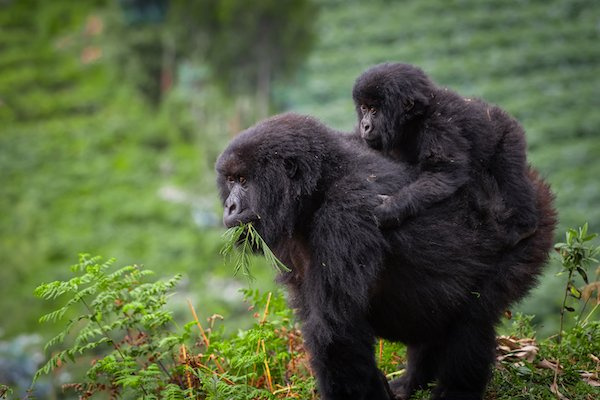
Contact us and book gorilla trek in Rwanda
Visit Rwanda’s remarkable mountain gorillas during our 2-Day Discounted Rwanda Gorilla Adventure, ideal for individuals with tight schedules.
Tipping During Rwanda Gorilla Visit
Tipping is usual during gorilla trekking expeditions in Rwanda. It is a means of expressing appreciation to the guides, porters, and others who enrich your experience. Tipping, though not obligatory, is greatly valued and can substantially influence the financial well-being of individuals employed in the tourism sector. During a Rwanda gorilla trekking journey, you will meet numerous service providers who merit acknowledgment for their diligence and commitment.
Generally, trekkers provide gratuities to their guides, who are essential for facilitating a secure and enlightening trekking experience. Porters, who aid in transporting your belongings, also value gratuities. Moreover, providing gratuities to the personnel at lodges and campgrounds where you reside is a considerate act. The tipping amount may fluctuate according to the quality of service and your satisfaction, although a general guideline remains beneficial.
What is a suitable tip for a private driver during Rwanda gorilla trekking?
The tip for a private driver on Rwanda gorilla trekking tours may fluctuate according on the duration of the trip and the standard of service rendered. A prevalent habit is to provide a gratuity of approximately $10 to $20 per day. This sum represents the driver’s diligence in providing a seamless and pleasant journey, together with their intrinsic familiarity with the local region.
Private drivers frequently exceed expectations to enhance your Rwanda Gorilla Trekking experience, providing valuable insights into the country’s culture and history. They may also facilitate logistics, including navigation through national parks and guaranteeing punctual arrivals at your locations. Expressing gratitude by tipping not only compensates their diligent efforts but also cultivates a favorable rapport, thereby enriching your whole experience.
What to Park for Gorilla Trekking in Rwanda
A trip in the Land of a Thousand Hills is unparalleled in comparison to any other experience on this remarkable continent. Consequently, it necessitates specialized packaging. Chilly, invigorating mornings. Tropical afternoons. The climate is temperate; yet, regardless of whether you are visiting during a rainy season, a raincoat is essential. The success of any gorilla is not solely contingent upon the time and season. Preparation is essential regardless of whether one is visiting during the dry or wet season. Appropriate equipment and a satisfactory level of physical fitness are essential for an enjoyable gorilla tracking experience.
Gorilla trekking in Volcanoes National Park, Rwanda, is conducted in the Gorilla Highlands to locate the endangered Mountain gorillas. Due to the characteristics of the forest, elevation, and topography, hiking boots should be prioritized on your gorilla trekking packing list. We strongly advise the use of lightweight hiking footwear for this endeavor as you determine what to include in your packing for gorilla tracking in Rwanda’s Volcanoes National Park.
Adventures in the bush to locate mountain gorillas frequently traverse unmarked trails. Your guide effectively navigates and clears the dense vegetation. Your gloves will be useful for safeguarding your hands while lifting branches or clearing away obstructing plants. Some of these plants may cause irritation, nevertheless you will value possessing them; it is a jungle! Occasionally, the steep inclines become treacherous, necessitating the need to grasp onto something; gloves will provide protection and comfort for your hands. Wearing gloves to protect your hands from germs is advisable, especially because you have a packed lunch and may need to eat periodically. This should replace the function of hand sanitizer in safeguarding against pathogens when you traverse the forest.
It is customary for many tourists to keep their valuable possessions, such as money, passports, and other pricey gadgets, with them at all times. It is imperative to prevent these objects from becoming wet due to your oversight of this little guideline. Regardless of whether you visit during the wet or dry season, it is imperative to have a waterproof jacket in the forest, as rain can occur unexpectedly.
Traversing a jungle should not be conflated with strolling in a savannah park or along a freeway. The gorilla highlands are characterized by dense vegetation, and trekking in this area may result in scratches from prickly plants on the body, legs, or arms. A long-sleeved shirt and trousers will significantly enhance both your safety and comfort. We recommend tucking your trousers into your socks to prevent stinging nettles or safari ants from entering your trousers. I am confident that you are now persuaded that skirts will enhance your appearance in other settings.
Gorilla trekking can last from 30 minutes to eight hours, necessitating a reasonable level of physical fitness prior to undertaking this excursion. Chocolate energy bits will be useful for replenishing depleted energy periodically. If the gorilla trekking trip extends beyond midday, you may need to locate a dining establishment in the absence of the gorillas. The minimum needed quantity of potable water is one and a half liters. Energy bites can consistently be located in neighboring shops or supermarkets with the assistance of your guide.

Who are porters / Role of Porters in Gorilla Visit in Rwanda
The role of porters in gorilla trekking is sometimes unrecognized, yet quickly valued by those who embark on their journey into the forests in search of gorillas. Gorilla trekking is an extraordinary expedition into the verdant rainforests of Africa, offering a unique opportunity to observe mountain gorillas in their native environment. It is justifiably considered one of the premier wildlife experiences around. Amid the excitement of observing gorillas, a group of unrecognized individuals plays a crucial part in guaranteeing the success and safety of these expeditions: the local porters.
Porters are the unrecognized champions of gorilla trekking, constituting the essential support for these thrilling expeditions. Possessing unparalleled strength and agility, they bear the burden of substantial equipment and provisions, facilitating trekkers’ navigation of arduous landscapes effortlessly.
When the terrain is arduous, even a modest daypack containing your packed lunch becomes cumbersome. Snacks, water, and cameras may appear to double in weight. A porter assists you with this. Traversing the challenging terrain of gorilla habitats necessitates considerable physical endurance and fortitude, attributes that porters possess in ample measure. The absence of the porters’ unwavering assistance would significantly increase the difficulty of the trekking experience for visitors.


As visitors begin their gorilla trekking expedition, it is imperative to interact with porters with respect and consideration. Basic human gestures, such expressing gratitude, inquiring about their lives, and adhering to trek protocols, enhance the experience for both you and the porter aiding you. By treating porters with decency and respect, trekkers foster a culture of mutual appreciation and understanding that enriches the whole trekking experience. The porters consistently express joy in welcoming people, and positive engagement with them fosters enriching shared human experiences alongside the gorilla encounters.
How to get to Volcanoes National Park
Accessing Volcanoes National Park is uncomplicated and direct, but the paths are winding; still, the roads are well-paved. Volcanoes National Park is a sanctuary for the rare and endangered mountain gorillas and golden monkeys, situated in the northwestern portion of Rwanda, namely in the Ruhengeri-Musanze district, with its headquarters at Kinigi. Volcano National Park include regions such as Burera, Rubavu, and Nyabihu, and is situated 65 miles (105 km) from Kigali, the capital city, adjacent to Mgahinga Gorilla National Park and Virunga National Park in the Democratic Republic of Congo. The three gorilla habitats are located within the Virunga protected area.
Volcano National Park is renowned for its endangered gorillas, and Rwanda has garnered significant foreign exchange from the park, which is the most frequented location in the country for travelers interested in gorilla trekking. Volcanoes National Park contains about 40% of the global mountain gorilla population and also serves as a habitat for various other species, including golden monkeys, elephants, reptiles, and birds.
Volcanoes National Park, often referred to as Parc National Des Volcans, is accessible via both road and air. Foreigners must possess a valid passport and visa, which can be obtained through their travel operator. A yellow fever vaccination card from your place of origin is also required. A Rwandan tourist visa is available for online purchase, priced at USD 145 for the East Africa visa and USD 75 for an e-visa.
Accessing Volcanoes National Park by Air: Kigali International Airport serves as the primary gateway, situated in the capital city of Kigali, and is the closest airport to the park; the trip from the airport to the park takes around two hours. Numerous airlines operate daily flights to Rwanda at competitive rates, contingent upon the selected class and level of comfort, including KLM, Brussels Airlines, Kenya Airways, Qatar Airways, Ethiopian Airlines, RwandAir, Turkish Airlines, and South African Airways.
Accessing Volcanoes National Park by road: The park can be reached using any mode of road transportation. It is the sole rapid and economical mode of transportation from the airport, requiring a bus ride to Musanze town, which takes two hours. It is recommended to consult your travel operator and utilize a rental vehicle, as there is no public transportation from Musanze town to the Kinigi Park headquarters.
Numerous companies provide rental vehicles at a reasonable cost below USD 50. Kingi is located 12 km north of Musanze in Ruhengeri, and because to favorable road conditions, it is feasible for travelers, particularly gorilla hikers, to trek and return to Kigali on the same day. Buses operated by the Virunga district service conduct travels from Musanze to Kinigi, with the initial departure at 6 AM for RWF 350, and the journey duration is 35 minutes.