
Mountain Gorilla Population in Rwanda
The mountain gorilla population in Rwanda is one of the most inspiring examples of wildlife recovery in modern conservation history. Once pushed to the brink of extinction, these great apes have steadily increased in number thanks to decades of sustained conservation efforts, innovative tourism regulation, and strong cross-border collaboration. Rwanda has become a global leader in endangered species protection, providing a model for integrating ecological preservation, community engagement, and responsible tourism. The country’s success is rooted in its commitment to long-term strategies that ensure both the survival of mountain gorillas and the well-being of the communities living near their habitats.
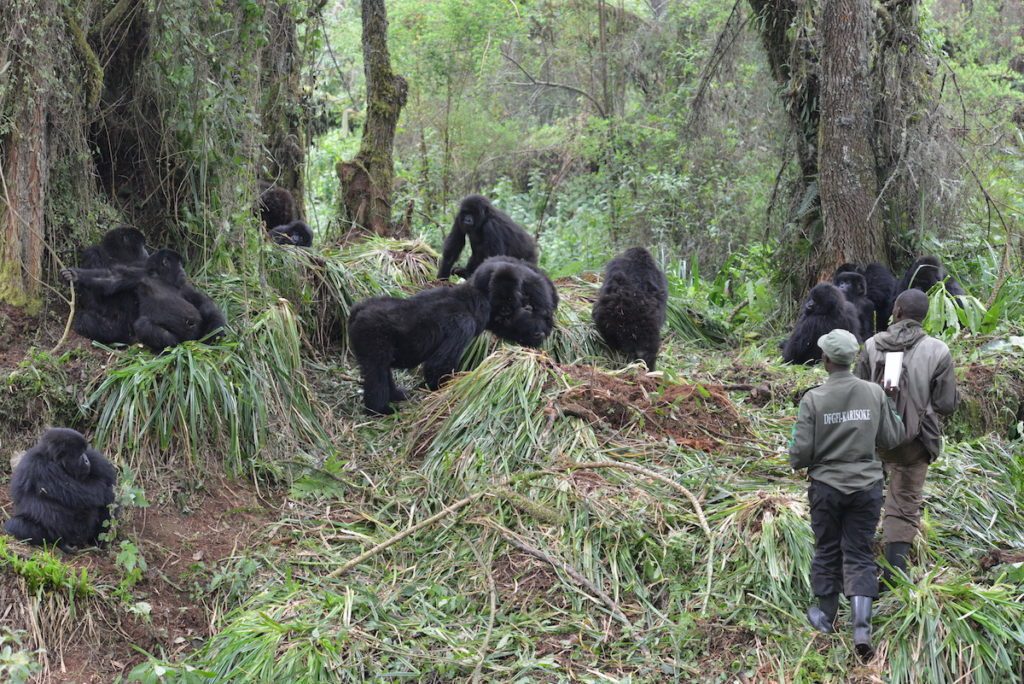
Mountain gorillas in Rwanda reside primarily within Volcanoes National Park, a lush high-altitude rainforest that is part of the larger Virunga Massif, shared with Uganda and the Democratic Republic of Congo. This transboundary ecosystem highlights the need for regional cooperation, as gorilla families freely move across national borders. Understanding the population status in Rwanda requires viewing it in the context of this larger ecological landscape, which encompasses both habituated gorilla groups studied for tourism and research, as well as unhabituated families that roam undisturbed.
The recovery of Rwanda’s mountain gorilla population represents a triumph of structured conservation planning. By combining scientific monitoring, strict anti-poaching measures, habitat management, and sustainable tourism, Rwanda has transformed a species once at the edge of extinction into a growing, stable population. Visitors to Volcanoes National Park not only experience these incredible primates in their natural environment but also witness firsthand how carefully implemented conservation efforts can achieve remarkable results.
Current Global Mountain Gorilla Population
Mountain gorillas are among the rarest animals on Earth, with a global population estimated at just over 1,000 individuals. These gorillas are divided into two geographically distinct populations: the Virunga Massif, shared by Rwanda, Uganda, and Congo, and the Bwindi Impenetrable Forest in Uganda. Rwanda’s Volcanoes National Park hosts a significant portion of the Virunga population, forming a vital sanctuary for both habituated and wild gorilla groups.
Although numbers fluctuate due to births, deaths, and territorial movement across borders, Rwanda consistently supports several gorilla families under protection. This includes both groups open to limited, regulated tourism and unhabituated families that remain untouched by human activity. The successful stabilization of the population has led to the species’ reclassification from “critically endangered” to “endangered,” reflecting measurable recovery.
Rwanda’s contribution to global gorilla conservation is significant. By providing strong protection measures and scientific monitoring within Volcanoes National Park, the country safeguards not only its local population but also contributes to the broader survival of the species across the entire Virunga Massif. This highlights the importance of national-level conservation efforts within a transboundary ecological framework, demonstrating how local action can have global implications.
Gorilla Families in Volcanoes National Park
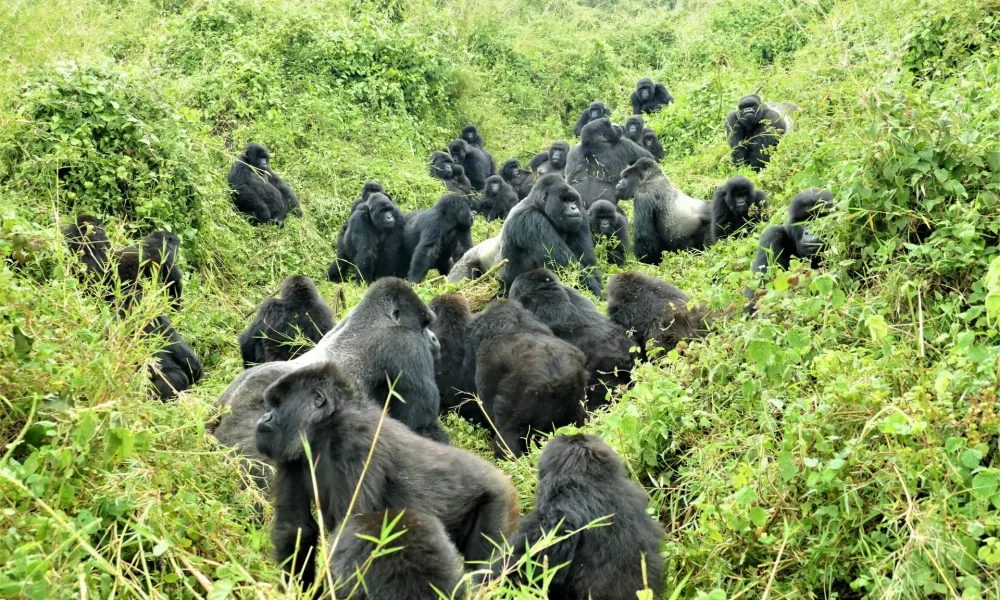
Volcanoes National Park is home to multiple habituated gorilla families, each consisting of a dominant silverback, several adult females, juveniles, and infants. Some families may include multiple males or subordinate silverbacks, while others are led by a single dominant male who protects and guides the group. In addition, several unhabituated families roam freely within the park, avoiding human contact and preserving natural behaviors.
Habituated families are monitored daily by rangers and trackers who ensure their safety and well-being. Limited daily visitation is allowed under strict conservation protocols, providing tourists with an opportunity to observe gorillas while minimizing disturbance. Visitors witness complex social behaviors, such as cooperative care for infants, play among juveniles, and the leadership roles of silverbacks.
Gorilla numbers fluctuate naturally due to births, deaths, and occasional migration between families or across borders. Continuous population monitoring ensures accurate tracking of demographic changes, health conditions, and reproductive success. The careful management of both habituated and unhabituated families ensures that tourism remains sustainable, while the gorillas’ natural behaviors are preserved for future generations.
Population Growth and Conservation Success
In the late 20th century, mountain gorilla populations faced critical declines, with global numbers falling below 300 individuals. Poaching, habitat loss, and political instability all contributed to this dramatic decline. However, decades of coordinated conservation action have reversed this trend, with Rwanda playing a central role in population recovery.
Today, mountain gorilla numbers have more than tripled from those crisis years, thanks to a structured conservation framework combining habitat protection, anti-poaching measures, veterinary monitoring, and community-based programs. Gorilla trekking tourism generates revenue that directly funds these protective measures, demonstrating how carefully managed human interaction can support species survival.
The recovery in Rwanda underscores the effectiveness of long-term strategies that balance ecological preservation with sustainable tourism and local participation. Population stabilization not only ensures the survival of these iconic primates but also provides a blueprint for global conservation efforts, showing that species on the brink of extinction can recover when dedicated resources and disciplined policies are in place.
The Role of Tourism in Population Stability
Tourism is a cornerstone of mountain gorilla conservation in Rwanda. Gorilla permits fund ranger patrols, veterinary interventions, habitat restoration, and community development programs. By limiting visits to eight people per gorilla family per day and enforcing a one-hour viewing time, Rwanda reduces stress on gorillas and minimizes the risk of disease transmission.
This high-value, low-volume tourism model ensures that revenue from each visitor contributes meaningfully to conservation. Beyond financial support, tourism raises awareness about the importance of protecting gorillas and their habitat. Visitors leave with a deeper understanding of ecological challenges and the value of sustainable conservation practices.
Without tourism, Rwanda’s long-term protection measures would lack consistent funding. Controlled tourism demonstrates that human interest in wildlife, when carefully managed, can become a positive force for ecological preservation rather than a threat. The stability of the gorilla population is closely tied to this balance between visitor access and protection.
Habitat Capacity and Future Challenges
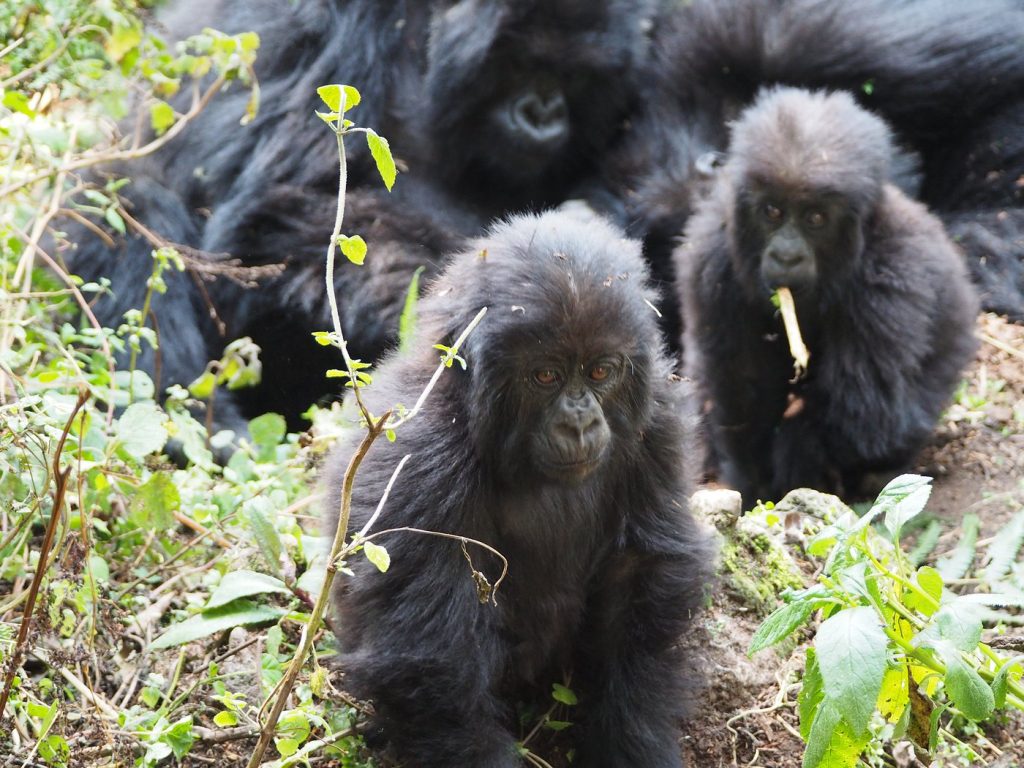
Although the mountain gorilla population is growing, habitat size remains limited. Volcanoes National Park spans approximately 160 square kilometers, requiring careful management to ensure sufficient food and territory for gorilla families. Authorities monitor feeding patterns, family movements, and territory overlap to prevent overcrowding and maintain ecological balance.
Climate change introduces additional uncertainty, with potential shifts in rainfall and vegetation growth affecting food availability. Conservationists must continually adapt strategies to address these environmental changes while supporting population growth.
Long-term population stability relies on maintaining the delicate balance between habitat capacity and ecological needs. Continued research, careful monitoring, and proactive management are essential to prevent future threats, ensuring that the mountain gorilla population remains resilient in a rapidly changing environment.
Cross-Border Movement within the Virunga Massif
Mountain gorillas are not restricted by political borders. Families may migrate between Rwanda, Uganda, and Democratic Republic of Congo depending on food availability, social dynamics, and territorial pressures. This requires strong regional cooperation among conservation agencies to maintain accurate population tracking and aligned protection strategies.
Rwanda works closely with neighboring countries to share monitoring data, coordinate anti-poaching patrols, and support cross-border habitat management. The Virunga Massif functions as a single, interconnected ecosystem despite being divided by national boundaries. Such collaboration is essential for ensuring that population growth and habitat stability are sustained across the broader gorilla range.
Cross-border cooperation demonstrates that effective conservation requires transcending political borders to protect species whose natural behaviors extend beyond human-imposed boundaries. Rwanda’s success in this regional context reinforces the importance of collaborative wildlife management.
Scientific Monitoring and Census Efforts
Regular gorilla censuses provide critical insights into population size, family structure, health, and overall demographic trends. Teams in Rwanda coordinate with colleagues in Uganda and Congo, tracking nests, observing behaviors, and collecting genetic and health data.
Long-term monitoring helps detect trends in population growth, reproductive rates, and potential threats from disease or environmental change. Scientific research conducted within Volcanoes National Park continually improves understanding of gorilla ecology and informs adaptive management strategies.
These efforts ensure that conservation policies are based on evidence, enabling authorities to respond quickly to emerging threats. Continuous scientific monitoring has been a key factor in the recovery and stability of Rwanda’s mountain gorilla population, providing data that guides both national and regional conservation planning.
Why Rwanda’s Population Matters Globally
Rwanda’s mountain gorilla population is a cornerstone of global primate conservation. The country’s disciplined approach demonstrates that endangered species recovery is achievable through strong political commitment, community engagement, and financial sustainability.
Each birth and successful habituation strengthens the species’ long-term survival prospects. By combining strict habitat protection, regulated tourism, and scientific monitoring, Rwanda sets a benchmark for conservation programs worldwide. The mountain gorillas of Volcanoes National Park serve as both a symbol and a tangible example of what careful, coordinated conservation can achieve.
Final Reflections
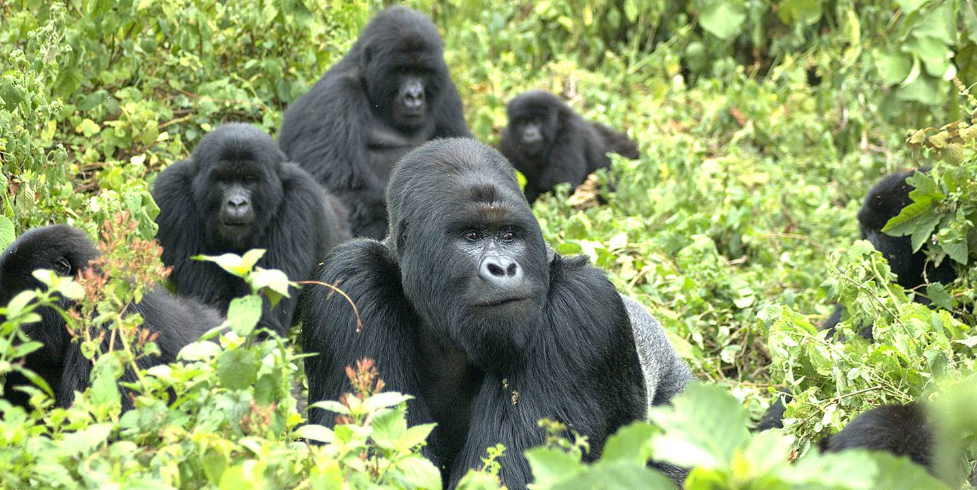
The mountain gorilla population in Rwanda reflects decades of dedicated effort and strategic planning. From near extinction to steady recovery, the species’ growth highlights the impact of structured tourism, rigorous monitoring, and cross-border collaboration.
Volcanoes National Park remains a vital sanctuary within the Virunga Massif, safeguarding gorillas for future generations. Continued vigilance, funding, and responsible tourism are essential to maintain this success. Rwanda’s experience proves that persistent, well-supported conservation initiatives can reverse even the direst declines in wildlife populations.
Support Gorilla Conservation with Your Visit
Responsible tourism directly supports mountain gorilla conservation. Volcanoes National Park organizes professionally managed gorilla trekking experiences, ensuring that every permit purchased contributes to protection, research, and local community development.
Visitors enjoy extraordinary wildlife encounters while knowing their participation sustains the population and habitat. By choosing responsible tourism, travelers help secure the long-term future of Rwanda’s mountain gorillas, participating in a global conservation success story.

Leave A Comment