
Volcanoes National Park Gorilla Trekking Guide: History, Gorilla Life, Prices, and Activities
Volcanoes National Park Gorilla Trekking Guide, Volcanoes National Park is one of the most famous wildlife destinations in Africa. The park is known for mountain gorilla trekking, golden monkey trekking, volcano hiking, and rich forest biodiversity. Travelers from all over the world visit this beautiful park to experience close encounters with endangered mountain gorillas in their natural habitat.
The park lies in northwestern Rwanda and forms part of the larger Virunga Conservation Area shared by Rwanda, Uganda, and the Democratic Republic of Congo. Volcanoes National Park is covered by bamboo forests, open grasslands, and volcanic mountains. It is home to rare animals, colorful birds, and unique plant species.
Many visitors come to the park because of the unforgettable mountain gorilla trekking experience. Others visit to learn about conservation history and the life of gorillas in the wild. The park also offers cultural experiences and nature walks that make every safari enjoyable.
A safari guide must understand the history of the park, gorilla behavior, trekking rules, prices, and activities. This knowledge helps visitors enjoy their adventure while protecting wildlife and nature for future generations.
Historical Events That Happened in Volcanoes National Park
Volcanoes National Park has a very rich conservation history. The park was established in 1925, making it one of the oldest national parks in Africa. It was created mainly to protect the endangered mountain gorillas living in the Virunga Mountains.
One of the most important historical figures connected to the park is Dian Fossey. She arrived in Rwanda in 1967 to study mountain gorillas. She built the Karisoke Research Center between Mount Karisimbi and Mount Bisoke. Her work helped the world understand gorilla behavior and the dangers facing gorillas.
At that time, poaching was a serious problem in the park. Gorillas were killed by hunters, while forests were destroyed for farming and settlement. Dian Fossey strongly fought against poaching activities. She spent many years protecting mountain gorillas and teaching local communities about conservation.
Sadly, Dian Fossey was killed in 1985 near her research center. Her death shocked conservationists around the world. Today, her work continues to inspire gorilla conservation in Rwanda and other countries.
Another important historical event was the recovery of mountain gorilla populations. Years ago, the number of mountain gorillas was very low. Through conservation, tourism revenue, and ranger protection, the population slowly increased. This success made Volcanoes National Park one of the leading conservation areas in Africa.
Physical Differences Between Silverback Gorillas and Other Gorillas
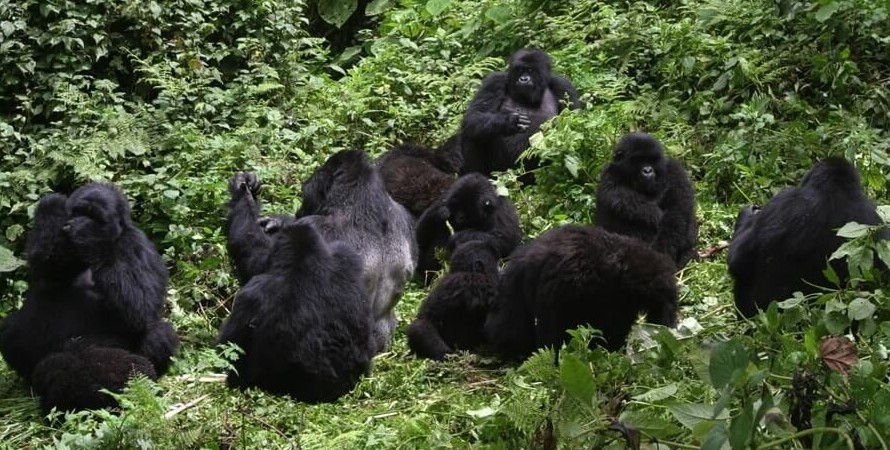
Mountain gorillas live in family groups led by a dominant male called a silverback gorilla. A silverback gets its name from the silver-colored hair that develops on its back after maturity. This usually happens when the male reaches about 12 years of age.
Silverback gorillas are larger and stronger than female gorillas and young/blackbacks males. They have broad chests, powerful arms, and massive heads. Their muscles are very visible because they spend much of their time moving through thick forests and protecting their families.
Female gorillas are smaller and lighter. They normally care for babies, build nests, and stay close to the silverback for protection. Young gorillas are playful and energetic. They enjoy climbing trees, rolling on the ground, and chasing one another.
Another physical difference is behavior. Silverbacks are calm but highly protective. When danger appears, the silverback may stand upright, beat its chest loudly, and make strong warning sounds. This behavior helps defend the family from threats.
Young male gorillas without silver hair are called blackbacks. These males may remain in the group or leave to form their own families later. During trekking, visitors can easily notice the size difference between the silverback and other members of the gorilla family.
Are All Male Gorillas Silverbacks?
Not all male gorillas are silverbacks. Every silverback is male, but not every male gorilla is a silverback. Male gorillas first grow as infants, juveniles, and then blackbacks before becoming silverbacks.
A blackback is a young adult male gorilla that has not yet developed silver hair on its back. Blackbacks are usually between 8 and 11 years old. They are strong but not fully mature. Some blackbacks remain under the leadership of the dominant silverback, while others leave the group when they become older.
A gorilla only becomes a silverback after reaching maturity. At this stage, the silver hair appears across the lower back. The gorilla also gains more strength, confidence, and leadership skills. Most gorilla families are led by one silverback, although some groups may have more than one mature male.
The silverback plays an important role in the family. He decides where the group feeds, rests, and sleeps. He also protects members from danger and keeps peace within the group.
During mountain gorilla trekking, guides often explain the social structure of gorilla families. Visitors usually enjoy watching how the silverback controls and cares for the group.
Safe Distance Between Visitors and Gorillas
During mountain gorilla trekking, visitors are required to keep a distance of at least 7 meters from the gorillas. This rule helps protect both humans and gorillas from diseases and unnecessary stress.
Mountain gorillas share much of their DNA with humans. Because of this, they can easily catch human illnesses such as flu, cough, or infections. Even a simple cold can become dangerous for gorillas living in the forest.
Park rangers and guides always remind visitors to follow trekking rules carefully. Visitors are advised not to shout, run, or make sudden movements near gorillas. Flash photography is also discouraged because it may disturb the animals.
Sometimes gorillas move closer to tourists on their own. In such situations, visitors are expected to remain calm and avoid touching the gorillas. Guides usually help tourists maintain proper behavior during the encounter.
Only people above 15 years are allowed to participate in gorilla trekking. Sick visitors are also discouraged from joining the trek because of the risk of spreading diseases.
These rules help protect mountain gorillas while allowing tourists to enjoy one of the most memorable wildlife experiences in the world.
Gorilla Trekking and Golden Monkey Trekking Prices
Mountain gorilla trekking is the most popular activity in Volcanoes National Park. Gorilla permits in Rwanda currently cost US$1,500 per person for foreign non-residents. The permit includes park entrance, ranger services, and one hour with the gorillas after finding them.
Although the price may seem high, the experience is truly special. Visitors hike through forests, bamboo zones, and volcanic slopes while searching for habituated gorilla families. The trek may take a few hours depending on where the gorillas are located.
Golden monkey trekking is another exciting activity in the park. Golden monkeys are small, active primates with bright golden-orange fur. They live mainly in the bamboo forests of the Virunga Mountains.
Golden monkey permits cost US$100 per person for foreign non-residents in Rwanda. The activity is shorter and easier compared to gorilla trekking. Visitors enjoy watching the monkeys jumping through bamboo trees while feeding and playing.
Both activities support conservation and local communities. Revenue from tourism helps protect wildlife, improve ranger patrols, and support nearby villages through community projects.
Travelers are advised to book permits early because demand for gorilla trekking is usually very high throughout the year.
Other Activities in Volcanoes National Park and Their Prices
Besides mountain gorilla trekking and golden monkey trekking, Volcanoes National Park offers many exciting safari activities.
One popular activity is hiking to the grave of Dian Fossey. This hike takes visitors through forest trails to the former Karisoke Research Center. The experience costs around US$75 per person.
Visitors can also hike Mount Bisoke, a volcanic mountain with a beautiful crater lake at the summit. The hike costs about US$75 per person and offers amazing views of the Virunga region.
Another adventure is climbing Mount Karisimbi, one of the tallest volcanoes in the area. This challenging two-day hike costs about US$400 per person for permits and includes camping on the mountain making it to cost up to US$700 to US$800 for full package of everything.
Nature walks are also available within the park. Tourists can explore forests, birdlife, caves, and scenic landscapes while learning about plants and animals from guides.
The Iby’Iwacu Cultural Village experience allows visitors to learn about traditional Rwandan culture, dances, local food, and community life. Prices usually start from around $25 per person.
Bird watching is another enjoyable activity because the park hosts many Albertine Rift bird species. Experienced bird guides help visitors identify rare and colorful birds in different habitats.
These activities make Volcanoes National Park more than just a gorilla destination. Travelers can enjoy culture, adventure, history, and nature in one safari.
Life of Mountain Gorillas in Volcanoes National Park
Mountain gorillas live peaceful and social lives inside Volcanoes National Park. They spend most of their day feeding, resting, grooming, and moving through the forest.
Their diet mainly includes leaves, bamboo shoots, stems, roots, and wild fruits. Adult gorillas can eat large amounts of vegetation every day because of their huge body size. During feeding time, young gorillas often play around while adults quietly search for food.
Mountain gorillas live in family groups called troops. A troop may have babies, juveniles, females, blackbacks, and one dominant silverback. The silverback protects the family and guides daily activities.
Baby gorillas depend greatly on their mothers during the first years of life. They enjoy climbing on their mothers and playing with other young gorillas. These playful moments are among the highlights during gorilla trekking.
At night, gorillas build nests using leaves and branches. They sleep in these nests until morning before starting another day in the forest.
Mountain gorillas are generally gentle animals. They rarely attack unless they feel threatened. Their peaceful behavior allows tourists to observe them closely during trekking experiences.
Conservation efforts continue to protect mountain gorillas from poaching, habitat destruction, and disease. Rangers monitor gorilla families daily to ensure their safety. Thanks to these efforts, mountain gorilla populations continue to grow slowly in the Virunga region.
Volcanoes National Park remains one of the best places in the world to experience the beauty, intelligence, and peaceful life of mountain gorillas in the wild.